
Joangsа Temple
63-12 Hwapo 3-gil, Mangyeong-eup, Gimje-si, Jeollabuk-do
Open in mapAbout this place
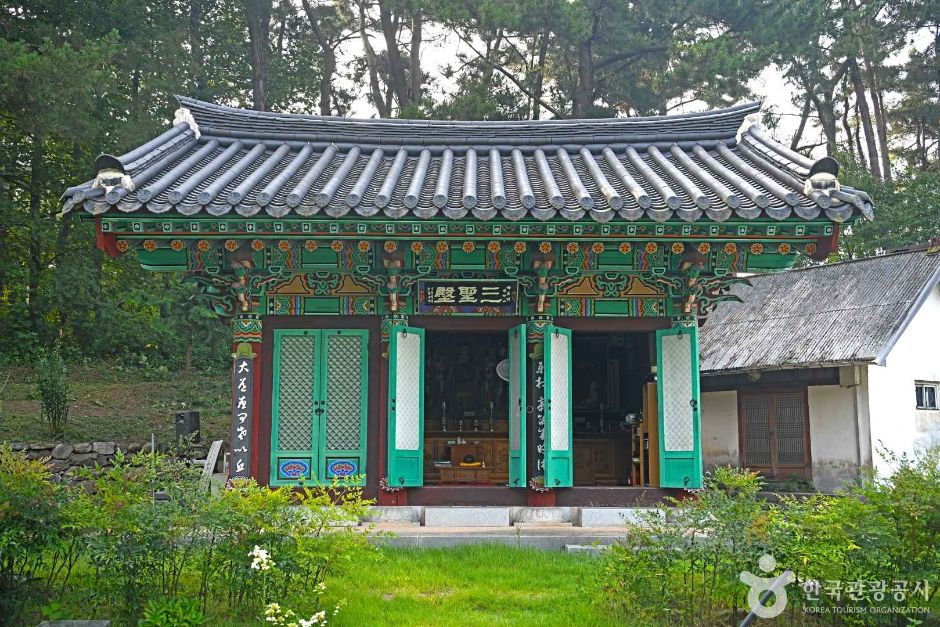
Joangsa Temple takes its name from the characters 'jo' (祖, patriarch) from 'Jinmuk josа' and 'ang' (仰, revere) from 'heuimang' (欽仰, admiration), reflecting reverence for Patriarch Jinmuk. This is the temple dedicated to Jinmuk Daesa (Great Master Jinmuk), a giant figure of Korean Buddhism and a renowned monk of the Jeolla region, at the very place where he was born. Within the temple grounds, a hall called 'Jinmuk Josajeon' is maintained to enshrine Master Jinmuk, as well as a portrait hall, and even the portraits of his mother and sister are venerated. Joangsa was founded in 1915; at the time only the main hall (Daeungjeon) existed, but subsequently a monks' quarters was built, a seven-story stone pagoda and bell pavilion were added. In 1977 the original main hall was demolished and rebuilt. This place was an important temple that served as the headquarters of the Daehwagyo order in the modern era alongside Master Jinmuk, and during the Japanese colonial period it housed a Daehwagyo missionary station where followers of Maitreya Buddha — believed to illuminate hope in the future for those suffering in the present world — were taught and spread. Accordingly, as evidence of the active religious activities in modern Korean Buddhism, a number of sacred cultural assets remain, including missionary texts, Buddhist paintings, and pagodas from the time.