Heritage Trails
A field guide to historic sites and landmarks you can visit.
Scenic spots

Seoul Amsadong Prehistoric Settlement
875 Olympic-ro, Gangdong-gu, Seoul (Amsadong)
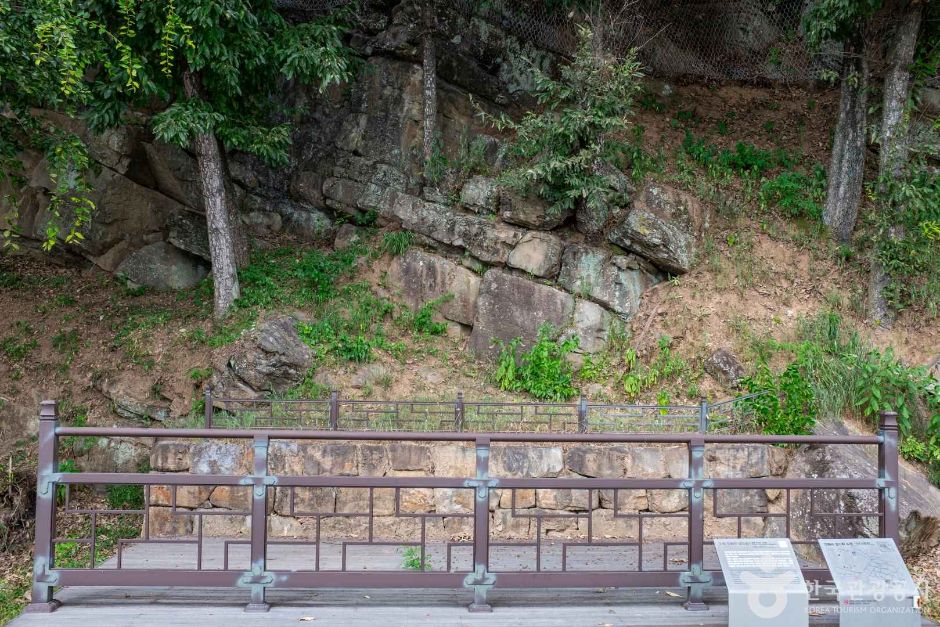
Goryeong Anhwari Rock Carvings
Ssangnim-myeon, Goryeong-gun, Gyeongsangbuk-do

Buldangdong Prehistoric Site Park
85 Buldang 11-ro, Seobuk-gu, Cheonan-si, Chungcheongnam-do (Buldangdong)
Daegokri Rock Carvings
Daegokri, Daesan-myeon, Namwon-si, Jeonbuk Special Self-Governing Province
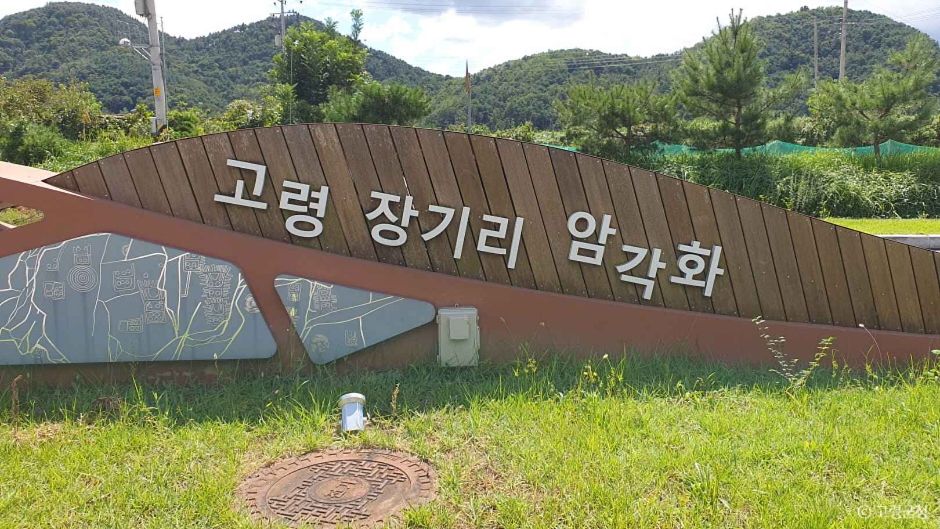
Goryeong Janggiri Rock Carvings (Yangjeondong Petroglyphs)
15-5 Araealter-gil, Daegaya-eup, Goryeong-gun, Gyeongsangbuk-do
Gocheokdong Dolmen
Gocheokdong, Guro-gu, Seoul

Sindong Standing Stone (Menhir)
5-7 Simcheon-ro, Jicheon-myeon, Chilgok-gun, Gyeongsangbuk-do

Cheongdo Beomgokri Dolmen Group
Beomgokri, Hwayang-eup, Cheongdo-gun, Gyeongsangbuk-do

Buyeo Songgukri Prehistoric Settlement
54 Seonsa-ro 225beon-gil, Chochon-myeon, Buyeo-gun, Chungcheongnam-do

Geumsan Cheonaeri·Yonghwari Dolmens
Yonghwari, Jewon-myeon, Geumsan-gun, Chungcheongnam-do

Buyeo Sanjikri Dolmens
Sanjikri, Chochon-myeon, Buyeo-gun, Chungcheongnam-do
![Gochang Dolmen Site [UNESCO World Heritage]](https://tong.visitkorea.or.kr/cms/resource/22/3018322_image2_1.jpg)
Gochang Dolmen Site [UNESCO World Heritage]
74 Goindol-gongwon-gil, Gochang-eup, Gochang-gun, Jeonbuk Special Self-Governing Province

Buan Guamri Dolmen Group
Seoksangri, Haseo-myeon, Buan-gun, Jeonbuk Special Self-Governing Province

Yeongcheon Boseongri Rock Carvings
Boseongri, Cheongtong-myeon, Yeongcheon-si, Gyeongsangbuk-do
Geojosa Temple
400-67 Geojo-gil, Cheongtong-myeon, Yeongcheon, Gyeongsangbuk-do

Gyeongju Eastern Historic Zone
Hwangnam-dong, Gyeongju, Gyeongsangbuk-do

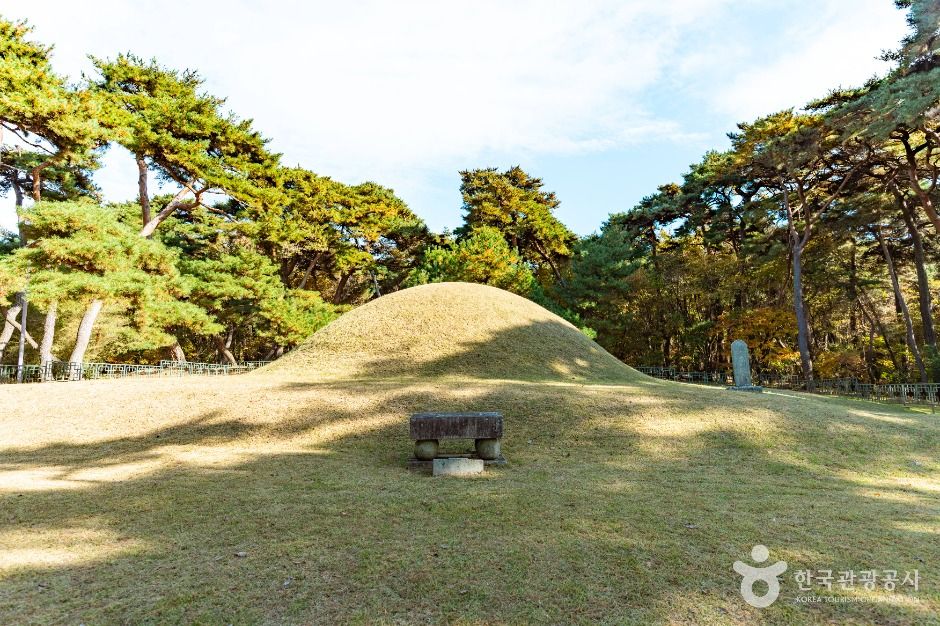
Gyeongju Tomb of Queen Seondeok
Bomun-dong, Gyeongju, Gyeongsangbuk-do

Gyeongju Geumcheok-ri Ancient Tombs
Geumcheok-ri, Geoncheon-eup, Gyeongju, Gyeongsangbuk-do

Gyeongju Inwang-dong Temple Site
Inwang-dong, Gyeongju, Gyeongsangbuk-do

Gyeongju Tomb of King Sinmu
Dongbang-dong, Gyeongju, Gyeongsangbuk-do

Gyeongju Baeban-dong Three Royal Tombs
Baeban-dong, Gyeongju, Gyeongsangbuk-do

Gyeongju Tomb of King Hyoso
Joyang-dong, Gyeongju, Gyeongsangbuk-do

Gyeongju Seorak-dong Ancient Tombs
Seorak-dong, Gyeongju, Gyeongsangbuk-do

Gyeongju Tomb of King Jima
Baeban-dong, Gyeongju, Gyeongsangbuk-do

Gyeongju Poseokjeong Site
Baeban-dong, Gyeongju, Gyeongsangbuk-do
Daebisa Temple (Cheongdo)
590 Bagok-gil, Geumcheon-myeon, Cheongdo, Gyeongsangbuk-do
Bullyeongsa Temple (Cheongdo)
99-8 Yongsan 3-gil, Maejeon-myeon, Cheongdo, Gyeongsangbuk-do

Gyeongju Gyerim Forest
Gyo-dong, Gyeongju, Gyeongsangbuk-do

Gyeongju Donggung Palace and Wolji Pond
102 Wonhwa-ro, Gyeongju, Gyeongsangbuk-do

Bogyeongsa Temple
523 Bogyeong-ro, Songra-myeon, Buk-gu, Pohang, Gyeongsangbuk-do

Gyeongju Namsan Mireukkol Seated Stone Buddha
Baeban-dong, Gyeongju, Gyeongsangbuk-do

Cheonmachong (Daereungwon)
9 Gyerim-ro, Gyeongju, Gyeongbuk

Nammijilbu Fortress
Heunghae-eup, Buk-gu, Pohang, Gyeongbuk

Sinheungsa Temple (Yeongcheon)
360-29 Geumho-ro, Geumho-eup, Yeongcheon, Gyeongbuk

Goseoksa Temple (Pohang)
526 Bangsan-ro, Janggi-myeon, Nam-gu, Pohang, Gyeongbuk

Gyeongju Jaemanjeong Well
Gyo-dong, Gyeongju, Gyeongbuk

Tomb of King Beopheung, Gyeongju
Hyohyeon-dong, Gyeongju, Gyeongbuk

Gyeongju Baeban-dong Stone Standing Triad Buddha
Bae-dong, Gyeongju, Gyeongbuk

Doseonsa Temple (Seoul)
278 Doseonsagil, Ui-dong, Gangbuk-gu, Seoul

Mitasa Temple (Seongdong)
21 Dokseodangno 40-gil, Seongdong-gu, Seoul

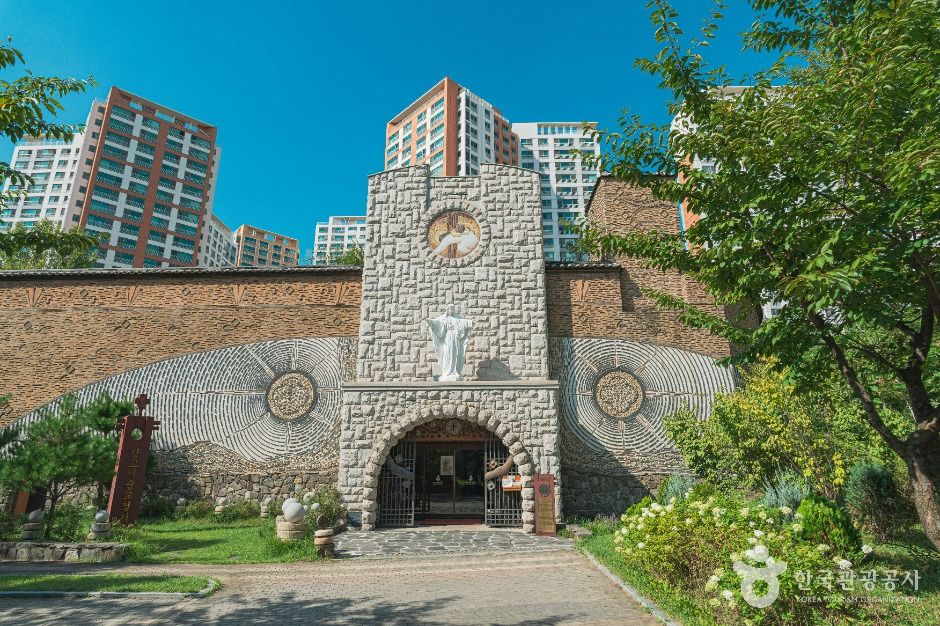
Former Yongsan Seminary and Sacred Heart of Jesus Church on Wonhyo-ro
49 Wonhyoro 19-gil, Wonhyo-ro 4-ga, Yongsan-gu, Seoul

Yeonjinam Hermitage (Gyeongju)
120-5 Hwalseonggil, Oedon-eup, Gyeongju-si, Gyeongsangbuk-do

Gwangheungsa Temple (Andong)
105 Gwangheungsagil, Seohu-myeon, Andong-si, Gyeongsangbuk-do

Yeongju Sinam-ri Rock-carved Triad of Buddhas
Sinam-ri, Isan-myeon, Yeongju-si, Gyeongsangbuk-do

Royal Tomb of King Sinmun, Gyeongju
Baeban-dong, Gyeongju-si, Gyeongsangbuk-do

Tapgok Rock-carved Buddha Group, Namsan, Gyeongju
36 Tapgolgil, Baeban-dong, Gyeongju-si, Gyeongsangbuk-do

Royal Tomb of King Heondeok, Gyeongju
Dongcheon-dong, Gyeongju-si, Gyeongsangbuk-do

Gyeongju Heongangwang Royal Tomb
Namsan-dong, Gyeongju-si, Gyeongsangbuk-do

Gyeongju Jeonggangwang Royal Tomb
Namsan-dong, Gyeongju-si, Gyeongsangbuk-do

Gyeongju Seongdeokwang Royal Tomb
Joyang-dong, Gyeongju-si, Gyeongsangbuk-do
![Gyeongju Seokguram Grotto [UNESCO World Heritage]](https://tong.visitkorea.or.kr/cms/resource/69/3581269_image2_1.jpg)
Gyeongju Seokguram Grotto [UNESCO World Heritage]
238 Seokgul-ro, Gyeongju-si, Gyeongsangbuk-do

Jeokcheonsa Temple (Cheongdo)
304 Wondong-gil, Cheongdo-eup, Cheongdo-gun, Gyeongsangbuk-do
Buseoksa Temple [UNESCO World Heritage]
345 Buseoksa-ro, Buseok-myeon, Yeongju-si, Gyeongsangbuk-do

Woljeong Bridge
11 Cheonwon 2-gil (Gyo-dong), Gyeongju-si, Gyeongsangbuk-do

Yonghwasa Temple (Sangju)
10-13 Jeungchon 2-gil, Hamchang-eup, Sangju-si, Gyeongsangbuk-do

Hangwangsa Temple
126 Gwoneungsugil, Sinnyeong-myeon, Yeongcheon-si, Gyeongsangbuk-do

Cheongdo Hapcheon-ri Stone Standing Amitabha Buddha
Hapcheon-ri, Hwayang-eup, Cheongdo-gun, Gyeongsangbuk-do

Gyeongju Mangdeoksa Temple Site
Baeban-dong, Gyeongju-si, Gyeongsangbuk-do

Uiseong Gyeongdeokwang Royal Tomb
Daeri-ri, Geumseong-myeon, Uiseong-gun, Gyeongsangbuk-do

Emille Bell (Sacred Bell of King Seongdeok the Great)
186 Iljong-ro, Gyeongju-si, Gyeongsangbuk-do (National Museum of Gyeongju)

Yeongji Stone Seated Buddha
Gwaereung-ri, Oedon-eup, Gyeongju-si, Gyeongsangbuk-do

Gyeongju Yuldong Rock-carved Three Standing Buddhas
69 Dudaean-gil (Yuldong), Gyeongju-si, Gyeongsangbuk-do

Gyeonhwon Mountain Fortress
Jangam-ri, Hwabuk-myeon, Sangju-si, Gyeongsangbuk-do
Gaetaesa Temple (Nonsan)
2614-11 Gyebaek-ro, Yeonsan-myeon, Nonsan-si, Chungcheongnam-do

Traditional Tomb of Gyeonhwon (Gyeonhwon Royal Tomb)
Geumgok-ri, Yeonmu-eup, Nonsan-si, Chungcheongnam-do

Taebongsa Temple (Iksan)
347-23 Jinbuk-ro, Samgi-myeon, Iksan-si, Jeollabuk-do

Donggo Mountain Fortress
Daeseong-dong, Wansan-gu, Jeonju-si, Jeollabuk-do

Gyeongguksa Temple (Seoul)
113-10 Bogungmun-ro, Seongbuk-gu, Seoul (Jeongneung-dong)

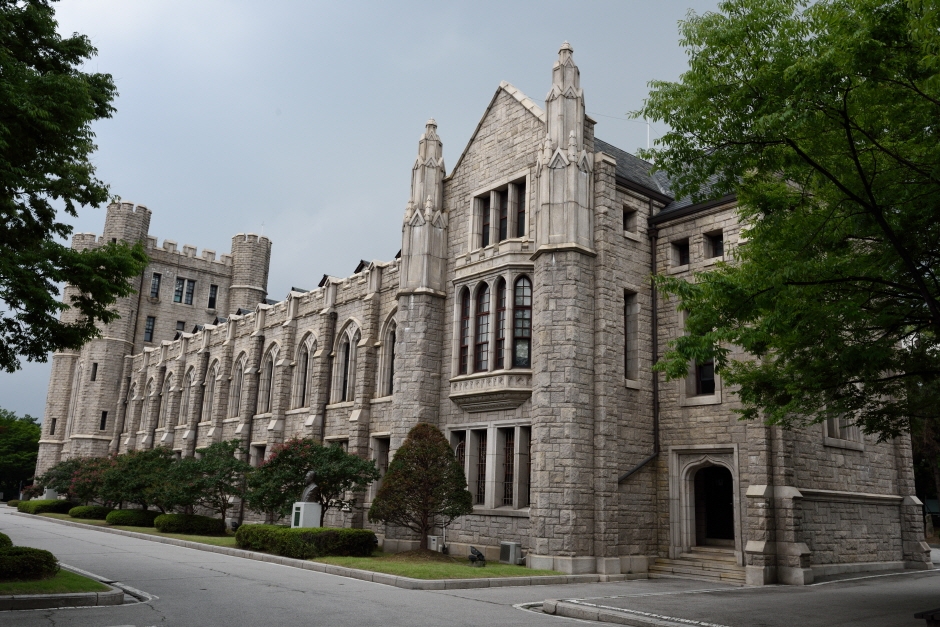
Seoul Korea University Central Library
145 Anam-ro, Seongbuk-gu, Seoul (Anam-dong 5-ga)

Cheongnyongsa Temple (Seoul)
65 Dongmangsan-gil, Jongno-gu, Seoul (Sungin-dong)

Anguksa Shrine (Seoul)
77 Nakseongdae-ro, Gwanak-gu, Seoul (Bongcheon-dong)

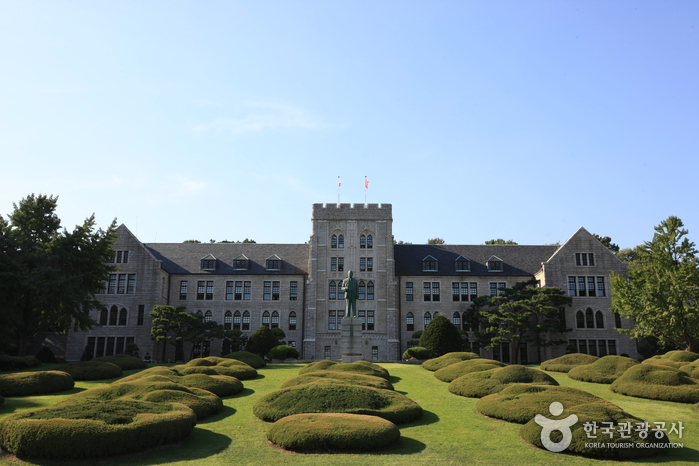
Seoul Korea University Main Building
145 Anam-ro, Seongbuk-gu, Seoul
Gwanmunsa Temple (Seoul)
111 Baumoe-ro 7-gil, Seocho-gu, Seoul

Yeongho Pavilion
187-5 Gangnam-ro, Andong-si, Gyeongsangbuk-do (Jeongha-dong)
Sindunsa Temple (Cheongdo)
355 Hwayangnamsan-gil, Hwayang-eup, Cheongdo-gun, Gyeongsangbuk-do

Namseongje Memorial Hall
18-16 Namseong-an-gil, Daesong-myeon, Nam-gu, Pohang-si, Gyeongsangbuk-do

Wolsongjeong Pavilion
517 Wolsongjeong-ro, Pyeonghae-eup, Uljin-gun, Gyeongsangbuk-do

Yeongcheon Joyang Pavilion
6 Munhwawon-gil, Yeongcheon-si, Gyeongsangbuk-do (Changgu-dong)

Nongam Jongtaek (Ancestral Home of Nongam)
162-133 Gasong-gil, Dosan-myeon, Andong-si, Gyeongsangbuk-do

Bocheonsa Temple (Gumi)
86 Haepyeong 4-gil, Haepyeong-myeon, Gumi-si, Gyeongsangbuk-do

Daedunsa Temple (Gumi)
691-78 Sanchon-Okgwan-ro, Okseong-myeon, Gumi-si, Gyeongsangbuk-do

Andong Icheon-dong Rock-Carved Standing Buddha (Jebiwon Stone Buddha)
Icheon-dong, Andong-si, Gyeongsangbuk-do

Asan Maengsssi Haengdan (Maeng Sa-seong's Historic House)
25 Haengdan-gil, Baebang-eup, Asan-si, Chungcheongnam-do

Daejosa Temple (Buyeo)
112 Seonghungro 197beon-gil, Imcheon-myeon, Buyeo-gun, Chungcheongnam-do

Nampo Walled Town
Eupnae-ri, Nampo-myeon, Boryeong-si, Chungcheongnam-do

Geumsan Cheonaeri Dragon and Tiger Stones
Cheonaeri, Jewon-myeon, Geumsan-gun, Chungcheongnam-do

Gaedoksa Temple
83 Gaedoksa-gil, Chubu-myeon, Geumsan-gun, Chungcheongnam-do

Gongju Sangsin-ri Flagpole Supports
Banpo-myeon, Gongju-si, Chungcheongnam-do

Seosan Yeomi-ri Standing Stone Buddha
Yeomi-ri, Unsan-myeon, Seosan-si, Chungcheongnam-do

Yeongin Stone Buddha
16-6 Yeongin-ro 96beon-gil, Yeongin-myeon, Asan-si, Chungcheongnam-do

Sangga-ri Mireuk Buddha
Sangga-ri, Deoksan-myeon, Yesan-gun, Chungcheongnam-do

Site of Mangwonjeong Pavilion
Seoul Mapo-gu 동교로8안길 23 (합정동)
![Changdeokgung Palace and Rear Garden [UNESCO World Heritage]](https://tong.visitkorea.or.kr/cms/resource/03/3092503_image2_1.jpg)
Changdeokgung Palace and Rear Garden [UNESCO World Heritage]
Seoul Jongno-gu 율곡로 99 (와룡동)

인왕사(서울)
Seoul Jongno-gu 통일로18가길 16-1 (무악동)
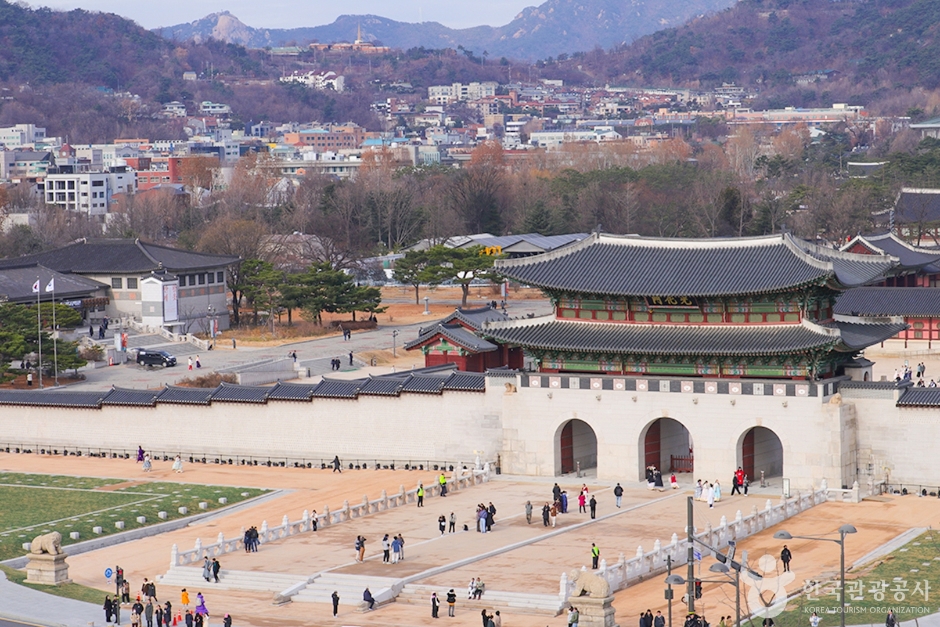
Gwanghwamun Gate
Seoul Jongno-gu 사직로 161

신선경과 류인호 묘역
Seoul Songpa-gu 동남로 263 (오금동)

정선옹주 묘역
Seoul Guro-gu 궁동

Unhyeongung Royal Residence, Seoul
Seoul Jongno-gu 삼일대로 464

호암산성
Seoul Geumcheon-gu 시흥동

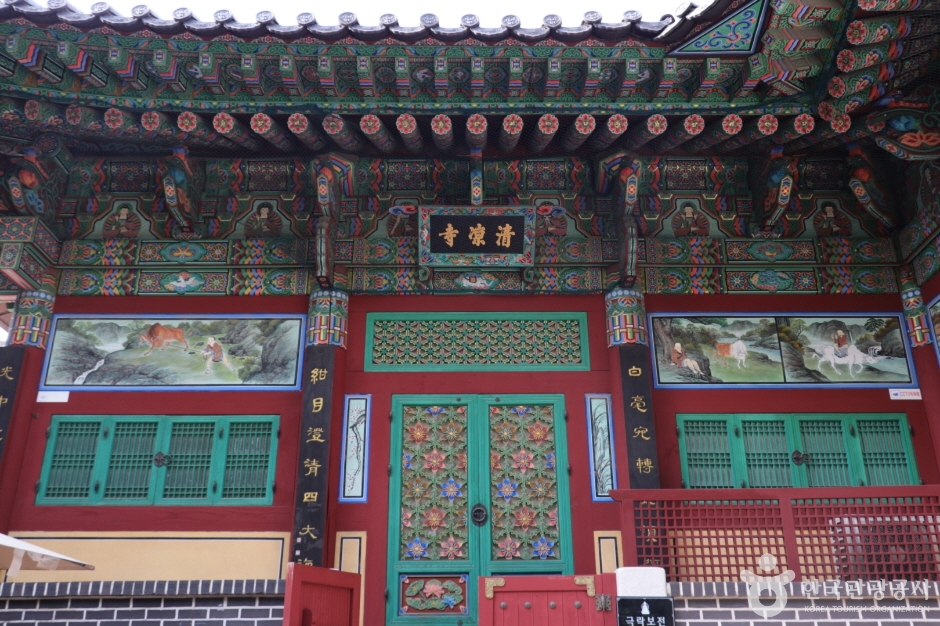
극락사(서울)
Seoul Jungnang-gu 망우로91길 100 (망우동)

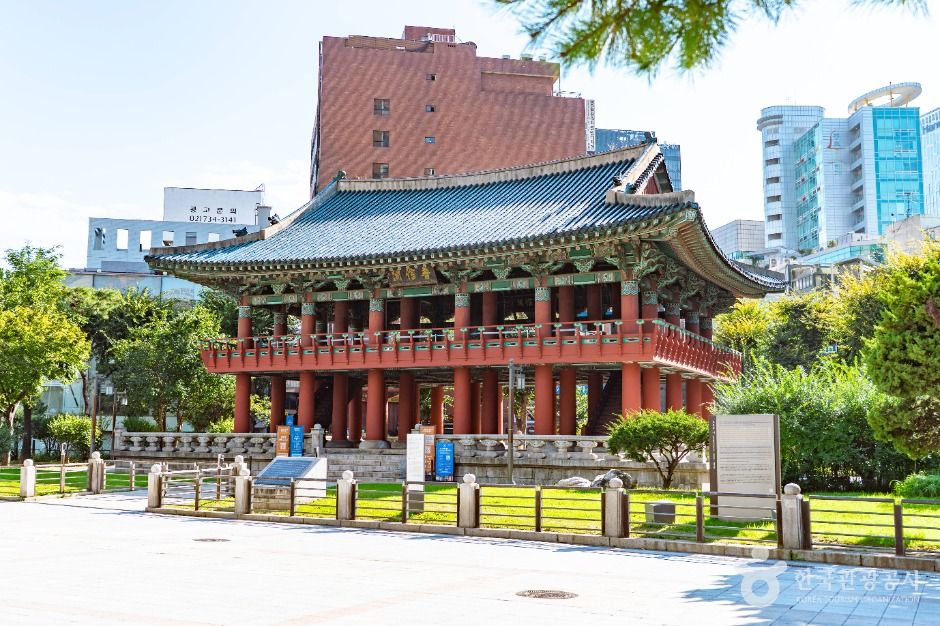
Site of Bosingak Bell Pavilion
Seoul Jongno-gu 종로 54

율곡로
Seoul Jongno-gu 율곡로

내원사(서울)
Seoul Seongbuk-gu 보국문로 262-151 내원사

정암사
Seoul Nowon-gu 덕릉로94길 127 (중계동)

미타사(성북)
Seoul Seongbuk-gu 보문사길 6-16 (보문동3가)

Jeoldusan Martyrs' Shrine
Seoul Mapo-gu 토정로 6 (합정동)

Bukchon Hanok Village
Seoul Jongno-gu 계동길 37 (계동)

Myeongdong Cathedral, Seoul
Seoul Jung-gu 명동길 74

당고개순교성지
Seoul Yongsan-gu 청파로 139-26

옥천암(서울)
Seoul Seodaemun-gu 홍지문길 1-38 (홍은동)

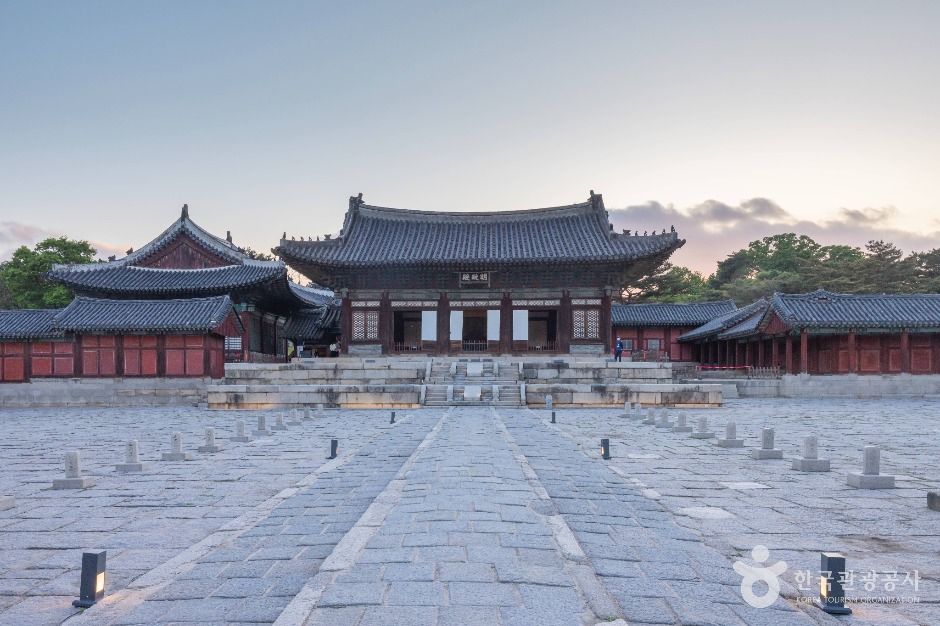
Changgyeonggung Palace
Seoul Jongno-gu 창경궁로 185 (와룡동)

Heunginjimun Gate (Dongdaemun)
Seoul Jongno-gu 종로 288 (종로6가)

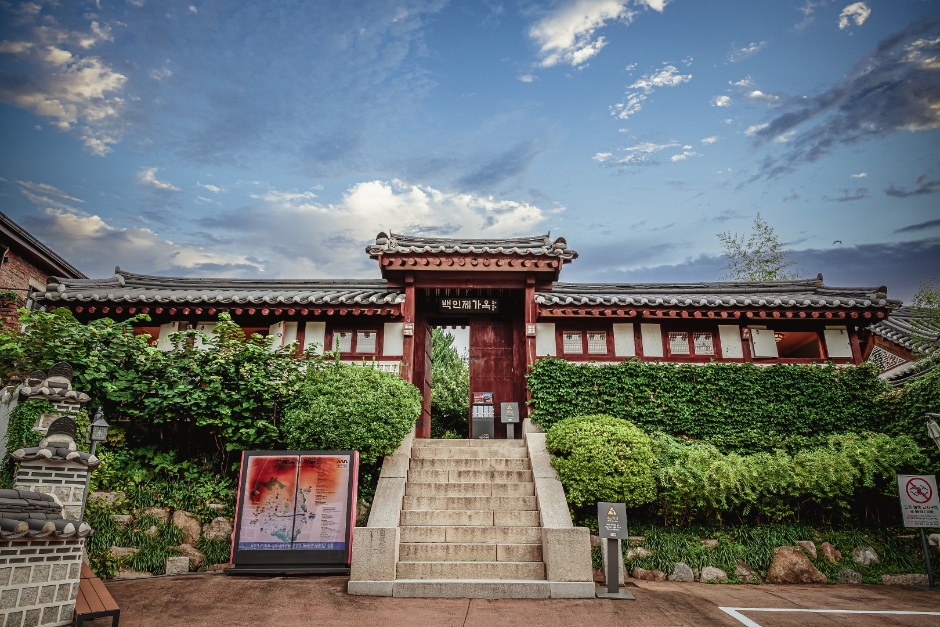
백인제가옥
Seoul Jongno-gu 북촌로7길 16 (가회동)

왜고개
Seoul Yongsan-gu 한강대로40길 46 (용산동5가)

금선사(서울)
Seoul Jongno-gu 비봉길 137

Jungmyeongjeon Hall
41-11 Jeongdong-gil, Jung-gu, Seoul

Heungseon Daewongun's Villa (Seokpajeong)
4-1 Changeuimun-ro 11-gil, Jongno-gu, Seoul (Buam-dong)

Hakdoam Hermitage (Seoul)
89 Jungye-ro 14da-gil, Nowon-gu, Seoul

Hong Geonik House in Pirun-dong
14-4 Pirundae-ro 1-gil, Jongno-gu, Seoul
Site of Min Yeonghwan's Self-Sacrifice
41 Insadong 5-gil, Jongno-gu, Seoul (Gongpyeong-dong)
Seoul Yeonghwiwon (Sunheon Imperial Noble Consort) and Sunginwon (Yi Jin)
90 Hongneung-ro, Dongdaemun-gu, Seoul
Daehanmun Gate of Deoksugung Palace
99 Sejong-daero, Jung-gu, Seoul (Jeong-dong)

Dongnipgwan Hall
251 Tongil-ro, Seodaemun-gu, Seoul (Hyeonjeo-dong)

Geoncheonggung Palace
161 Sajik-ro, Jongno-gu, Seoul (Sejong-ro)
Seokpajeong Garden
4-1 Changeuimun-ro 11-gil, Jongno-gu, Seoul (Buam-dong)

Janggi Cheokwabi Stele and Geunmindang
99 Eupnae-gil, Janggi-myeon, Nam-gu, Pohang-si, Gyeongsangbuk-do

Yecheon Samgang Tavern
27 Samgang-ri-gil, Pungyang-myeon, Yecheon-gun, Gyeongsangbuk-do

Birthplace of President Park Chung-hee
107 Park Chung-hee-ro, Gumi-si, Gyeongsangbuk-do

Sangju Donghak Church Hall
64 Ugi 1-gil, Euncheok-myeon, Sangju-si, Gyeongsangbuk-do

General Shin Dolseok's Birthplace and Historic Site
218 Shin Dolseok-janggun-gil, Chuksan-myeon, Yeongdeok-gun, Gyeongsangbuk-do

Yuha Temple (Andong)
39 Oeun-gil, Waryong-myeon, Andong-si, Gyeongsangbuk-do

Gongju Ugeumssi Battlefield
Geumhak-dong, Gongju-si, Chungcheongnam-do

Yeongtapsa Temple (Dangjin)
139-33 Seongharo, Myeoncheon-myeon, Dangjin-si, Chungcheongnam-do

Modeoksa Shrine
12 Nabundong-gil, Mok-myeon, Cheongyang-gun, Chungcheongnam-do

Bodeoksa Temple (Yesan)
400-74 Gayasan-ro, Deoksan-myeon, Yesan-gun, Chungcheongnam-do

Gongju Jungdong Catholic Church
6 Seongdang-gil, Gongju-si, Chungcheongnam-do

Seosan Yu Gibang House
72-10 Imunanjil, Unsan-myeon, Seosan-si, Chungcheongnam-do

Seonguksa Temple (Namwon)
239 Sanseong-gil, Sanchok-dong, Namwon-si, Jeonbuk Special Autonomous Province

Geumsan Church (Gimje)
407 Moaksan-ro, Geumsan-myeon, Gimje-si, Jeonbuk Special Autonomous Province
Site of Independence Declaration Distribution
457 Samil-daero, Jongno-gu, Seoul (Gyeongwun-dong)

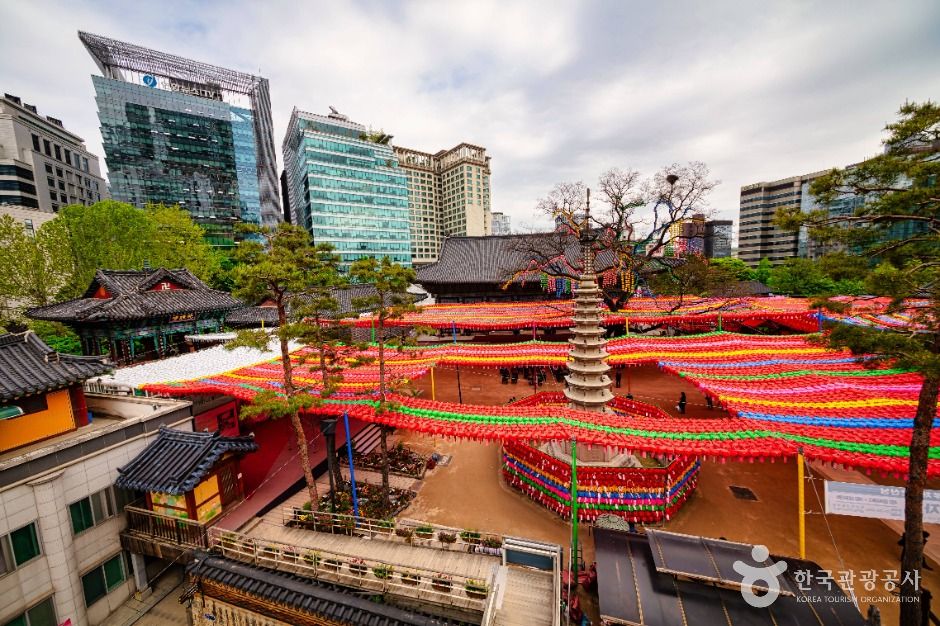
Jogyesa Temple (Seoul)
55 Ujeongguk-ro, Jongno-gu, Seoul (Gyeonji-dong)

Junggang High School
164 Changdeokgung-gil, Jongno-gu, Seoul

Seungdong Church
7-1 Insadong-gil, Jongno-gu, Seoul

Boseongsa Printing Press Site
55 Ujeongguk-ro, Jongno-gu, Seoul (Gyeonji-dong)

Uiyeolsa Shrine (Yongsan)
177-18 Hyochangwon-ro, Yongsan-gu, Seoul

Old House of Choe Sun-u
9 Seongbuk-ro 15-gil, Seongbuk-gu, Seoul (Seongbuk-dong)
Gyeongseong Bumin Hall Bombing Site
125 Sejong-daero, Jung-gu, Seoul (Taepyeong-ro 1-ga)

Tapgol Park Octagonal Pavilion
99 Jongno, Jongno-gu, Seoul (Jongno 2-ga)
Cheongnyang Temple (Seoul)
10-3 Jegi-ro 31-gil, Dongdaemun-gu, Seoul

Seoul Gyeonggyojang (Kim Gu's Headquarters)
29 Saemoonan-ro, Jongno-gu, Seoul (Pyeong-dong)

Stimson Hall, Yonsei University, Seoul
50 Yonsei-ro, Seodaemun-gu, Seoul (Sinchon-dong)
Mapo Tram Terminus March 1st Movement Protest Site
20 Mapo-daero, Mapo-gu, Seoul (Mapo-dong)
Residence Site of Sin Seok-gu
100 Cheonggyecheon-ro, Jung-gu, Seoul

Cheondogyo Central Grand Temple
457 Samil-daero, Jongno-gu, Seoul (Gyeongwun-dong)

Imjeongsa Temple (Seongju)
24-35 Seongjueup 5-gil, Seongju-eup, Seongju-gun, Gyeongsangbuk-do

Naeat Village, Andong
5-4 Naeat-gil, Imha-myeon, Andong-si, Gyeongsangbuk-do

Byeongamjeong Pavilion and Separate Shrine of the Yecheon Gwon Clan
22-39 Seonghyeon-gil, Yongmun-myeon, Yecheon-gun, Gyeongsangbuk-do

Sinheungsa Temple (Sangju)
32 Jungbeol 2-gil, Hwabuk-myeon, Sangju-si, Gyeongsangbuk-do

Hyegwangsa Temple (Gyeongsan)
7 Jangsan-ro 24-gil, Gyeongsan-si, Gyeongsangbuk-do

Kim Dae-gi's House
80-8 Geumdangsil-gil, Yongmun-myeon, Yecheon-gun, Gyeongsangbuk-do

Old Ganggyeong Holiness Church Chapel
40-1 Gyebaek-ro 219beon-gil, Ganggyeong-eup, Nonsan-si, Chungcheongnam-do

Banyasa Temple (Nonsan)
104 Samjeon-gil, Gayagok-myeon, Nonsan-si, Chungcheongnam-do

Birthplace of Dr. Jo Byeong-ok
249 Yugwansun-gil, Byeongcheon-myeon, Dongnam-gu, Cheonan-si, Chungcheongnam-do

Seongdeoksa Temple
109-8 Bonghwasan-ro, Jungnang-gu, Seoul (Sangbong-dong)

Bonwonjeongsa Temple (Seoul)
1 Samgaksan-ro, Gangbuk-gu, Seoul

Gilsangsa Temple (Seoul)
68 Seonjam-ro 5-gil, Seongbuk-gu, Seoul (Seongbuk-dong)

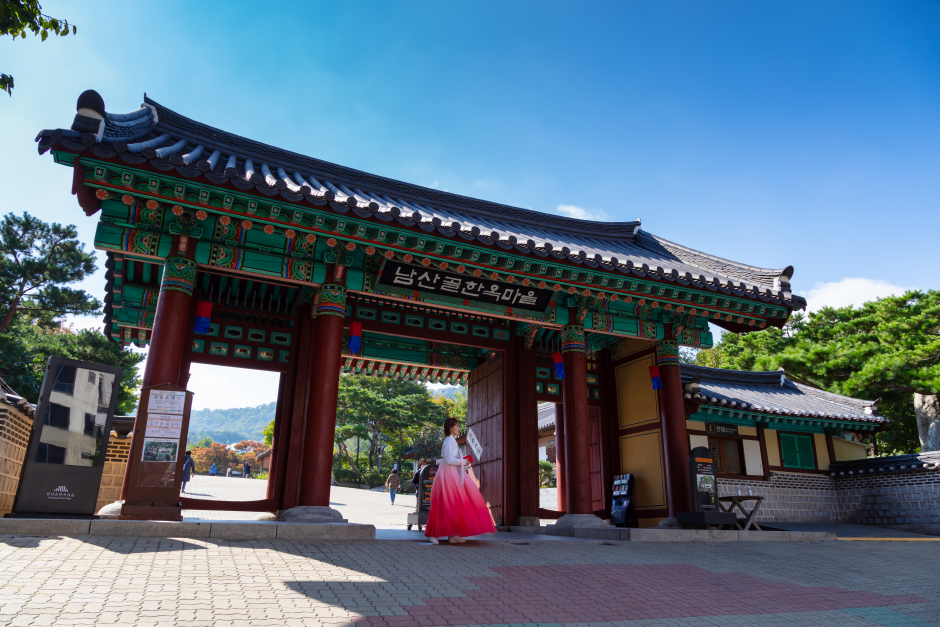
Namsangol Hanok Village
28 Toegye-ro 34-gil, Jung-gu, Seoul (Pil-dong 2-ga)

House of Yun Geuk-yeong
5 Insubong-ro 84-gil, Gangbuk-gu, Seoul (Suyu-dong)
April 19th National Cemetery
17 4.19-ro 8-gil, Gangbuk-gu, Seoul
Seongbuk-dong Catholic Church
28 Seonjam-ro, Seongbuk-gu, Seoul (Seongbuk-dong)

Sukjeongmun Gate of Bukak Mountain
Samcheong-dong, Jongno-gu, Seoul
General MacArthur's Han River Defense Line Inspection Site
275 Singil-ro, Yeongdeungpo-gu, Seoul (Yeongdeungpo-dong)

Flagpole Supports and Five-Story Brick Pagoda in Unheung-dong, Andong
Unheung-dong, Andong-si, Gyeongsangbuk-do

Yeongcheon National Cemetery
1720 Hoguk-ro, Gogyeong-myeon, Yeongcheon-si, Gyeongsangbuk-do

Surimsa Temple
34 Gasansanseong-gil, Dongmyeong-myeon, Chilgok-gun, Gyeongsangbuk-do
Dobongsa Temple
785-66 Yuhak-ro, Seokjeok-eup, Chilgok-gun, Gyeongsangbuk-do

Ilchul Seon Center (Pohang)
551-74 Jeongdong-gil, Donghaemyeon, Nam-gu, Pohang-si, Gyeongsangbuk-do

Manbulsa Temple (Yeongcheon)
139-14 Naeseo-ro, Bugan-myeon, Yeongcheon-si, Gyeongsangbuk-do

Yi Eung-no Historic Site (Sudeok Inn)
Sacheon-ri, Deoksan-myeon, Yesan-gun, Chungcheongnam-do

Gagwonsa Temple
245 Gagwonsa-gil, Dongnam-gu, Cheonan-si, Chungcheongnam-do

Seyangsa Shrine
47 Chilseon-ro, Chunghwa-myeon, Buyeo-gun, Chungcheongnam-do

Chungnyeongsa Shrine
1121-43 Chungseo-ro, Hongseong-eup, Hongseong-gun, Chungcheongnam-do

Seonggongsa Temple
371 Seonggok-gil, Useong-myeon, Gongju-si, Chungcheongnam-do

Yaksuam Hermitage (Jeonju)
46-10 Dodangsan-ro, Deokjin-gu, Jeonju-si, Jeollabuk-do

Yongyeonjeong Pavilion
156-12 Yangak-gil, Gyebuk-myeon, Jangsu-gun, Jeollabuk-do

Bonghwangsa Temple (Gimje)
474 Obong 2-gil, Geumgu-myeon, Gimje-si, Jeollabuk-do

Cheongnyongsa Temple (Gimje)
80-122 Moag 15-gil, Geumsan-myeon, Gimje-si, Jeollabuk-do
Landmarks
Jeongok-ri Paleolithic Site, Yeoncheon
Historic Site · Yeoncheon, Gyeonggi
A Paleolithic site located along the Hantangang River in Yeoncheon-gun, Gyeonggi-do. It drew scholarly attention when an Acheulean-type handaxe, discovered by a U.S. soldier stationed in Korea, was excavated here. This discovery overturned the prevailing theory that bifacially worked handaxes did not exist in East Asia, marking a turning point in global Paleolithic research. Traces of Paleolithic people's life from hundreds of thousands of years ago are widely confirmed along the riverside hills. Today, it has been developed together with the Jeongok Prehistory Museum and is cherished as a hands-on heritage site where a Paleolithic festival is held every year.
Amsa-dong Prehistoric Settlement Site, Seoul
Historic Site · Gangdong, Seoul
A Neolithic village site preserved along the Hangang River in Gangdong-gu, Seoul. The traces of people who built pit dwellings and led a settled life about 6,000 years ago are well preserved here. Various everyday artifacts, including comb-pattern pottery, have been excavated, making it a representative site of the Neolithic culture of the Korean Peninsula. Pit dwellings have been reconstructed over the excavated house sites, allowing visitors to grasp life of that era at a glance. It is a renowned destination for education and hands-on experience where one can encounter prehistoric times in the heart of the city.
Bangudae Petroglyphs, Ulsan
Rock Art · Ulju, Ulsan
Prehistoric petroglyphs carved on a cliff in the upper reaches of the Taehwagang River in Ulju-gun, Ulsan, depicting in fine detail various animals such as whales, deer, and wild boar, as well as hunting scenes. In particular, whaling scenes, including a harpooned whale and a calf, are regarded as prehistoric art that is rare even on a global scale. They are a precious record showing the livelihood, beliefs, and ecological awareness of the people of that time. In recognition of their value, their inscription on the UNESCO World Heritage List is being pursued.
Osan-ri Neolithic Site, Yangyang
Historic Site · Yangyang, Gangwon
A Neolithic site located on the East Coast in Yangyang-gun, Gangwon-do, regarded as a representative site showing the earliest Neolithic culture on the Korean Peninsula. Through excavation, various artifacts have been identified, including house sites, hearth sites, pottery, and a human face figure modeled in clay. It holds very high academic value, offering a glimpse into the life and spiritual world of the Neolithic people of the East Coast. It is an indispensable place for understanding the origin and development of the Neolithic culture of the Korean Peninsula.
- UNESCO
Ganghwa Bugeunri Dolmen
Tumulus · Ganghwa, Incheon
A Bronze Age dolmen located in Bugeun-ri, Ganghwa-gun, Incheon. It is a classic example of the table-type dolmen, in which a massive capstone is supported by two upright stones. As a tomb of the ruling class of the time and a symbol of power, it is a megalithic monument whose construction required the mobilization of an enormous labor force. Together with the Gochang and Hwasun dolmens, it has been inscribed on the UNESCO World Heritage List in recognition of its value. It is widely known as an iconic landscape representing Korean dolmens.
- UNESCO
Gochang Dolmen Sites
Tumulus · Gochang, Jeonbuk
A Bronze Age dolmen site located in Gochang-gun, Jeollabuk-do, where hundreds of dolmens are densely concentrated in a small area, showing a distribution rare even on a global scale. Dolmens of various types, including table-type and go-board-type, are distributed together, allowing one to examine their transformation in a single location. Together with the Ganghwa and Hwasun dolmens, it has been inscribed on the UNESCO World Heritage List. It is a representative site that shows the scale of Bronze Age society and its burial culture.
- UNESCO
Hwasun Dolmen Sites
Tumulus · Hwasun, Jeonnam
A Bronze Age dolmen site spread along the foot of a mountain in Hwasun-gun, Jeollanam-do, where hundreds of dolmens form clusters. In particular, a quarry where capstones were detached remains alongside them, making it a rare place where one can examine how dolmens were made. Together with the Ganghwa and Gochang dolmens, it has been inscribed on the UNESCO World Heritage List. It vividly conveys the manufacturing process of megalithic culture and burial customs.
Chamseongdan Altar, Manisan, Ganghwa
Historic Site · Ganghwa, Incheon
An altar for heaven-worship rituals located on the summit of Manisan Mountain in Ganghwa-gun, Incheon, said to be the place where Dangun Wanggeom performed rites to heaven. The altar, made of stacked stones, sits atop the mountain and was regarded as a sacred space connecting to heaven. Even today, national events including Gaecheonjeol (National Foundation Day) and the lighting of the torch for the National Sports Festival are held here. It is a symbolic place that carries on the founding myth of the nation and the tradition of heaven-worship rituals.
Chungju Goguryeo Stele
Historic Site · Chungju, Chungbuk
A stele erected in Chungju, Chungcheongbuk-do, the only Goguryeo stele found in South Korea. It is precious evidence showing that in the 5th century Goguryeo extended its power southward beyond the Hangang River basin, supporting the southward-advance policy of the eras of King Gwanggaeto and King Jangsu. The inscription contains content that allows one to infer the relationship between Goguryeo and Silla. It holds great value as a historical record that reveals the territorial disputes among the Three Kingdoms and the political situation of the time.
Achasan Fortress, Seoul
Fortress / Capital Fortress · Gwangjin, Seoul
Mountain fortress and outpost sites from the Three Kingdoms period located along the ridge of Achasan Mountain in Gwangjin-gu, Seoul, which was a military stronghold overlooking the Hangang River. Outpost sites built during the period when Goguryeo contended with Baekje and Silla over the Hangang River basin are confirmed at several places along the ridge. The excavated pottery and weapons show Goguryeo's military activities of the time. It is a place that vividly conveys the front line of the struggle for the Hangang River and the scene of the contention among the Three Kingdoms.
Pungnap Earthen Rampart and Mongchon Fortress, Seoul
Fortress / Capital Fortress · Songpa, Seoul
A capital-city site of the Hanseong period of Baekje located in Songpa-gu, Seoul; Pungnaptoseong Fortress, together with the nearby Mongchontoseong Fortress, is identified as the early royal capital of Baekje. It is a massive earthen fortress built by compacting earth along the Hangang River, and through excavation, large-scale building sites and various artifacts have been confirmed. It is a key site showing how Baekje, said to have been founded by King Onjo, grew in the Hangang River basin. It is a place that reveals the starting point of Baekje's 700-year history.
Seokchon-dong Tumuli, Seoul
Tumulus · Songpa, Seoul
An early Baekje tomb complex located in Songpa-gu, Seoul, where stone-mound tombs (stacked-stone tombs) are distributed. They take on the Goguryeo-style stone-mound tomb form, making them an important site that allows one to infer the origin of the Baekje ruling class and the relationship between the two states. They are presumed to be royal-class tombs from the heyday of Hanseong Baekje around the time of King Geunchogo. Together with Pungnaptoseong and Mongchontoseong fortresses, it is a place that shows the standing of Hanseong Baekje.
- UNESCO
Gongsanseong Fortress, Gongju
Fortress / Capital Fortress · Gongju, Chungnam
A Baekje mountain fortress located in Gongju, Chungcheongnam-do, the capital-city fortress of the period when Baekje, having lost Hanseong, moved its capital to Ungjin. The fortress walls, built along the ridge beside the Geumgang River, are well preserved, showing that it was a center of defense and politics. Passing through the era of King Muryeong, Baekje raised its national strength once again here. As one of the Baekje Historic Areas, it has been inscribed on the UNESCO World Heritage List.
- UNESCO
Tomb of King Muryeong and Songsan-ri Tumuli, Gongju
Tumulus · Gongju, Chungnam
A cluster of royal Baekje tombs set on the Songsan-ri hill in Gongju, Chungcheongnam-do, among which the Tomb of King Muryeong is a rare royal tomb whose occupant has been clearly identified. From the brick-built tomb came a memorial stone along with splendid artifacts such as gold ornaments, attesting to the high level of Baekje culture. Clear traces of exchange with China's Southern Dynasties reveal its international character at the time. It is inscribed on the UNESCO World Heritage List as part of the Baekje Historic Areas.
- UNESCO
Busosanseong Fortress and Nakhwaam Rock, Buyeo
Fortress / Capital Fortress · Buyeo, Chungnam
A fortress capital of the Sabi period of Baekje located on Mount Busosan in Buyeo, Chungcheongnam-do, this mountain fortress guarded the last capital of Baekje. Within the fortress remain the sites of military granaries and pavilions, and Nakhwaam is a place imbued with the legend that, at the fall of Baekje, court ladies threw themselves into the river. It is a site where the glory and tragedy of King Uija and the Baekje restoration are entwined together. It is inscribed on the UNESCO World Heritage List as part of the Baekje Historic Areas.
- UNESCO
Jeongnimsaji Temple Site, Buyeo
Historic Site · Buyeo, Chungnam
A temple site of the Sabi period of Baekje located in Buyeo, Chungcheongnam-do, where a five-story stone pagoda representative of Baekje stands tall. Slender and well-balanced, as though the style of wooden architecture had been rendered in stone, the pagoda is regarded as a archetype of Korean stone pagodas. It is presumed to have been built as the central temple of the capital after King Seong moved the capital to Sabi. It is inscribed on the UNESCO World Heritage List as part of the Baekje Historic Areas.
- UNESCO
Neungsan-ri Tumuli and Gilt-Bronze Incense Burner, Buyeo
Tumulus · Buyeo, Chungnam
A cluster of royal Baekje tombs located in Buyeo, Chungcheongnam-do, said to be where the kings of the Sabi period were buried. From a nearby temple site was excavated the Gilt-bronze Incense Burner of Baekje, counted as an artifact that reveals the pinnacle of Baekje craftsmanship and thought. The incense burner, harmonizing a phoenix with mountains and figures, embodies the aesthetic sensibility of the Baekje people and a Daoist and Buddhist worldview. It is inscribed on the UNESCO World Heritage List as part of the Baekje Historic Areas.
Gungnamji Pond, Buyeo
Historic Site · Buyeo, Chungnam
An artificial pond located in Buyeo, Chungcheongnam-do, said by records to be the earliest palace garden pond in Korea. It is said to have been created by King Mu of Baekje, and it displays a garden style in which an island and a pavilion in the middle of the pond are brought into harmony. It is also a place imbued with the tale that King Mu was none other than Seodong, and with the story of Princess Seonhwa. In summer the lotus flowers bloom in profusion, making it beloved as a landscape representative of Buyeo.
- UNESCO
Mireuksaji Temple Site, Iksan
Historic Site · Iksan, Jeonbuk
A large-scale temple site of Baekje located in Iksan, Jeollabuk-do, said to have been founded by King Mu of Baekje. The stone pagoda here is the earliest and largest among the surviving stone pagodas of Korea, making it a precious artifact that shows the process of transition from wooden pagodas to stone pagodas. A distinctive monastery layout, comprising three pagodas and main halls, has been confirmed. It is inscribed on the UNESCO World Heritage List as part of the Baekje Historic Areas.
- UNESCO
Wanggung-ri Site, Iksan
Historic Site · Iksan, Jeonbuk
The remains of a Baekje royal palace located in Iksan, Jeollabuk-do, regarded as the center of Baekje's administration of Iksan in its late period. Through excavation, palace walls, the site of a main throne hall, a garden, and workshop and latrine facilities have been confirmed, concretely revealing the structure of the royal palace. It is a key site that suggests King Mu either moved the capital to Iksan or administered it separately. It is inscribed on the UNESCO World Heritage List as part of the Baekje Historic Areas.
Bogam-ri Tumuli, Naju
Tumulus · Naju, Jeonnam
A large tomb cluster located in the Yeongsangang River basin in Naju, Jeollanam-do, the burial ground of the local power that ran from Mahan to Baekje. Within a single mound, a distinctive structure in which several burial facilities are placed, together with the tradition of jar-coffin tombs, is confirmed. It is an important site that reveals the relationship between the Baekje central authority and the indigenous power of the Yeongsangang River basin. It is a place that tells of the distinctiveness and transformation of the ancient culture of the Yeongsangang River basin.
Dr. Wangin Historic Site, Yeongam
Historic Site · Yeongam, Jeonnam
A historic site located in Yeongam, Jeollanam-do, a place honoring Wang In, a Baekje scholar said to have transmitted the Thousand Character Classic and the Analects to Japan. Wang In is handed down as a figure who conveyed Chinese characters and learning to Japan, contributing to the development of ancient Japanese culture. At this place, said to be his birthplace, a shrine and relics have been maintained. As a place symbolizing the cultural exchange between Baekje and Japan, in spring the Wang In Culture Festival is held together with the cherry blossoms.
Naesosa Temple, Buan
Buddhist Temple · Buan, Jeonbuk
A temple set at the foot of Mount Neunggasan in Buan, Jeollabuk-do, an old temple said to have been founded during the Baekje period. The fir forest path leading from the Iljumun gate to the temple is so beautiful that it is counted as a fine spot for walking. The flower-latticed doors of the Daeungbojeon main hall, with their intricate floral carvings, display the beauty of Korean wooden architecture. With its quiet, tranquil atmosphere harmonizing with the mountain landscape, it is a mountain temple visited by many.
Geumsansa Temple, Gimje
Buddhist Temple · Gimje, Jeonbuk
A Buddhist temple on the slopes of Moak Mountain in Gimje, North Jeolla Province, representing the Maitreya faith tradition. It is home to the Mireukjeon hall enshrining a massive Maitreya Buddha, along with numerous cultural treasures. It is said to be where Gyeon Hwon, founder of Later Baekje, was confined after being ousted by his own son, making it a stage of dramatic history. As the center of Maitreya faith, this temple holds centuries of devotion and history.
- UNESCO
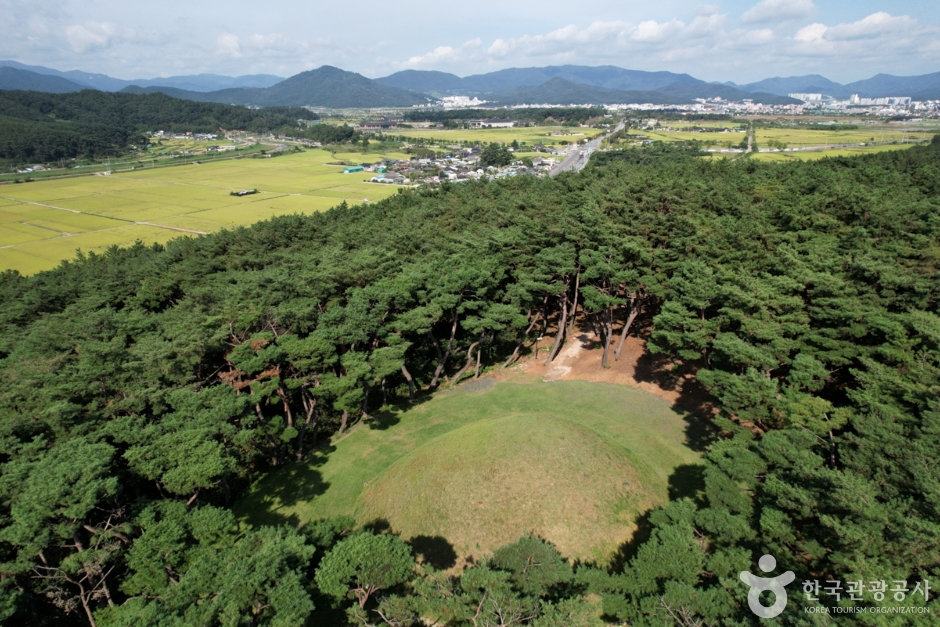
Daereungwon Tumuli Park (Cheonmachong, Hwangnamdaechong), Gyeongju
Tumulus · Gyeongju, Gyeongbuk
A cluster of Silla royal tombs located in the heart of Gyeongju, Gyeongsangbuk-do, where enormous burial mounds gather to form a distinctive landscape. The Heavenly Horse Painting (Cheonmado) drawn on a mudguard was excavated from Cheonmachong Tomb, and a splendid gold crown and ornaments were unearthed from Hwangnamdaechong Tomb, demonstrating the level of Silla's golden culture. At Cheonmachong, whose interior is open to the public, you can directly observe the structure of a Silla wooden-chamber tomb with a stone mound. It is inscribed on the UNESCO World Heritage List as part of the Gyeongju Historic Areas.
- UNESCO
Cheomseongdae Observatory, Gyeongju
Historic Site · Gyeongju, Gyeongbuk
An astronomical observatory of Silla located in Gyeongju, Gyeongsangbuk-do, known as the oldest surviving astronomical observation facility in the East. Built during the reign of Queen Seondeok by stacking stones one upon another, it is distinguished by its bottle-like shape with gentle curves. It demonstrates the scientific level of the Silla people, who observed the heavens and applied their findings to agriculture and politics. It is inscribed on the UNESCO World Heritage List as part of the Gyeongju Historic Areas.
- UNESCO
Hwangnyongsa Temple Site, Gyeongju
Historic Site · Gyeongju, Gyeongbuk
The site of Silla's largest temple, located in Gyeongju, Gyeongsangbuk-do, where a colossal nine-story wooden pagoda once stood tall. The nine-story wooden pagoda, erected during the reign of Queen Seondeok, was a symbol of national protection embodying the wish to subdue the surrounding countries, but it was burned down and lost during the Mongol invasions. Although only the foundation stones remain today, their scale allows one to imagine the might of Silla Buddhism. It is inscribed on the UNESCO World Heritage List as part of the Gyeongju Historic Areas.
Bunhwangsa Temple, Gyeongju
Buddhist Temple · Gyeongju, Gyeongbuk
A Silla temple located in Gyeongju, Gyeongsangbuk-do, said to have been founded during the reign of Queen Seondeok. A brick-style stone pagoda, built by trimming stones to resemble bricks, remains and represents one branch of the Silla stone-pagoda style. It is also known as a temple with a deep connection to the Great Master Wonhyo, who resided and was active there. Adjacent to the site of Hwangnyongsa Temple, it formed one of the centers of Silla Buddhist culture.
- UNESCO
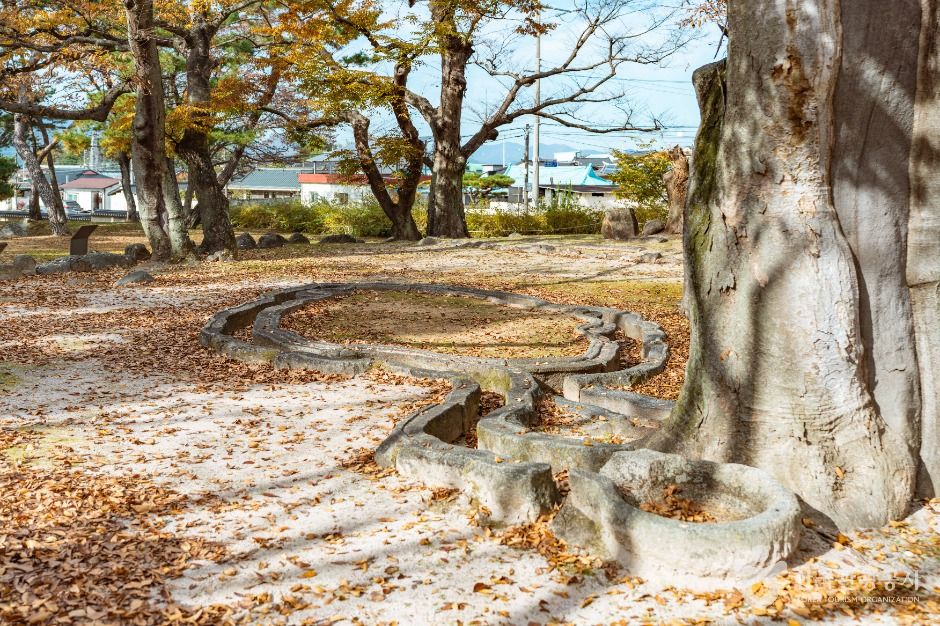
Poseokjeong Pleasure Grounds, Gyeongju
Historic Site · Gyeongju, Gyeongbuk
A Silla relic located at the foot of Namsan Mountain in Gyeongju, Gyeongsangbuk-do, where a winding water channel carved out of stone remains. It is said to have been a royal banquet space where wine cups were floated along this channel while poems were composed. A poignant story is handed down that, during the late Silla period, King Gyeongae was attacked by Gyeon Hwon of Later Baekje while enjoying a banquet here. It is a place imbued with both the splendor and the decline of Silla. It is inscribed on the UNESCO World Heritage List as part of the Gyeongju Historic Areas.
Oreung Royal Tombs and Najeong Well, Gyeongju
Tumulus · Gyeongju, Gyeongbuk
An early Silla royal tomb complex located in Gyeongju, Gyeongsangbuk-do, consisting of five large mounds said to hold the burials of early kings, including Bak Hyeokgeose. The nearby Najeong is said to be the setting of the Silla foundation myth, in which Bak Hyeokgeose was born from an egg. It is a place that holds the traditions surrounding the beginning of Silla and its founding progenitor. The serene scenery surrounded by a pine grove evokes the dawn of Silla's thousand-year history.
- UNESCO
Daeseongdong Tumuli and Tomb of King Suro, Gimhae
Tumulus · Gimhae, Gyeongnam
A burial complex of Geumgwan Gaya located in Gimhae, Gyeongsangnam-do, where the tombs of the Gaya ruling class are gathered. Through excavation, abundant relics such as iron armor, weapons, and earthenware were unearthed, revealing the standing of Geumgwan Gaya, which was called the country of iron. Nearby lies the tomb of King Suro, said to have founded Gaya. It is inscribed on the UNESCO World Heritage List as one of the Gaya Tumuli.
- UNESCO
Jisan-dong Tumuli, Goryeong
Tumulus · Goryeong, Gyeongbuk
A burial complex of Daegaya located along the ridge of Jusan Mountain in Goryeong, Gyeongsangbuk-do, where large tombs of royal rank are distributed in rows. Excavations confirmed gilt-bronze crowns, earthenware, and weapons, along with traces of human sacrifice in which several people were buried together, revealing the power of the Daegaya ruling class. It conveys the standing of Daegaya, the later center of the Gaya confederacy. It is inscribed on the UNESCO World Heritage List as one of the Gaya Tumuli.
- UNESCO
Marisan Tumuli, Haman
Tumulus · Haman, Gyeongnam
A burial complex of Ara Gaya located along a ridge in Haman, Gyeongsangnam-do, where rounded mounds line up to form a distinctive landscape. Through excavation, relics characteristic of Ara Gaya, such as flame-patterned earthenware, were confirmed, revealing its cultural individuality. It conveys the standing of Ara Gaya, which ruled the Haman area among the various Gaya states. It is inscribed on the UNESCO World Heritage List as one of the Gaya Tumuli.
- UNESCO
Okjeon Tumuli, Hapcheon
Tumulus · Hapcheon, Gyeongnam
A burial complex located in Hapcheon, Gyeongsangnam-do, said to be the tombs of the ruling class of the Dara state, which was based in the Hwanggang River basin. Excavations unearthed outstanding relics such as splendid gold earrings and ring-pommel swords with dragon-and-phoenix patterns, revealing the high cultural level of the Dara state. It is a site that vividly reveals the diversity of the various small Gaya states. It is inscribed on the UNESCO World Heritage List as one of the Gaya Tumuli.
- UNESCO
Songhak-dong Tumuli, Goseong
Tumulus · Goseong, Gyeongnam
A burial complex of So Gaya located in Goseong, Gyeongsangnam-do, where mounds sit on a hill close to the sea. Through excavation, earthenware and relics showing traces of exchange with various Gaya states were confirmed. It conveys the standing of So Gaya, which grew on the basis of maritime exchange along the southern coast. It is inscribed on the UNESCO World Heritage List as one of the Gaya Tumuli.
- UNESCO
Gyodong and Songhyeon-dong Tumuli, Changnyeong
Tumulus · Changnyeong, Gyeongnam
A burial complex located in Changnyeong, Gyeongsangnam-do, comprising the tombs of the ruling class of Bihwa Gaya, which existed in this region. Excavations confirmed gilt-bronze crowns, ornaments, and the human remains of those buried as sacrifices, vividly revealing the burial customs and social conditions of the time. It also reveals the characteristics of a frontier where Gaya culture and Silla culture met. It is inscribed on the UNESCO World Heritage List as one of the Gaya Tumuli.
- UNESCO
Yugok-ri and Durak-ri Tumuli, Namwon
Tumulus · Namwon, Jeonbuk
A burial complex of a Gaya power located on the Unbong Plateau in Namwon, Jeollabuk-do, where mounds are distributed in the mountainous area east of the Baekdudaegan mountain range. Excavations confirmed Gaya-style relics along with traces of exchange with Baekje and Silla, revealing the independence and external relations of the Gaya power in this region. It is a site that shows that Gaya's territory extended even into the mountainous eastern part of the Honam region. It is inscribed on the UNESCO World Heritage List as one of the Gaya Tumuli.
Bonghwang-dong Site, Gimhae
Historic Site · Gimhae, Gyeongnam
A settlement site of Geumgwan Gaya located in Gimhae, Gyeongsangnam-do, said to have been the central area where the royal fortress and a village stood. At the nearby Hoehyeon-ri shell mound, earthenware and bone tools were unearthed along with shells, revealing the daily life of the Gaya people. Unlike other tomb-centered sites, it is a place where one can confirm the traces of dwelling sites and livelihood. It is a site that allows one to imagine the urban appearance of Geumgwan Gaya, which is said to have been founded by King Suro.
Bokcheon-dong Tumuli, Busan
Tumulus · Dongrae, Busan
A burial complex located in Dongnae, Busan, comprising the tombs of the ruling class of a frontier region where Gaya and Silla met. Through excavation, iron armor, weapons, and various earthenware were unearthed, revealing the way the two cultures blended. At the nearby Bokcheon Museum, you can examine the excavated relics in person. It is a site that conveys the transition of this region's history as it passed from Gaya to Silla.
Daegaya Museum and Jusan Fortress, Goryeong
Museum · Goryeong, Gyeongbuk
A museum and mountain fortress located in Goryeong, Gyeongsangbuk-do, serving as a hub where the history of Daegaya can be examined in one place. The museum exhibits items excavated from sites such as the Jisan-dong tumuli, while the nearby Jusanseong Fortress is a mountain fortress that guarded the royal capital of Daegaya. One can also encounter the culture of Daegaya, including Ureuk, who created the gayageum. It is a place that serves as the starting point for exploring Daegaya, centered on Goryeong.
- UNESCO
Bulguksa Temple, Gyeongju
Buddhist Temple · Gyeongju, Gyeongbuk
A temple on the slopes of Toham Mountain in Gyeongju, North Gyeongsang Province, showcasing the pinnacle of Unified Silla Buddhist culture. It is said to have been greatly expanded by Chief Minister Kim Daeseong during the reign of King Gyeongdeok. The two stone pagodas, Dabotap and Seokgatap, stand facing each other as masterpieces of Korean pagoda art. Its stone platforms and elaborate stone structures such as Cheongungyo and Baekungyo are also outstanding. Together with Seokguram, it is inscribed on the UNESCO World Heritage List.
- UNESCO
Seokguram Grotto, Gyeongju
Buddhist Temple · Gyeongju, Gyeongbuk
An artificial stone grotto temple near the summit of Toham Mountain in Gyeongju, North Gyeongsang Province, representing the zenith of Unified Silla Buddhist sculpture. Granite was carved to form a round chamber housing the principal Buddha, with bodhisattvas and disciples intricately carved on the walls. It is said to have been created by Kim Daeseong during the reign of King Gyeongdeok. Its position overlooking the East Sea and its superb artistic form earned it UNESCO World Heritage status alongside Bulguksa.
- UNESCO
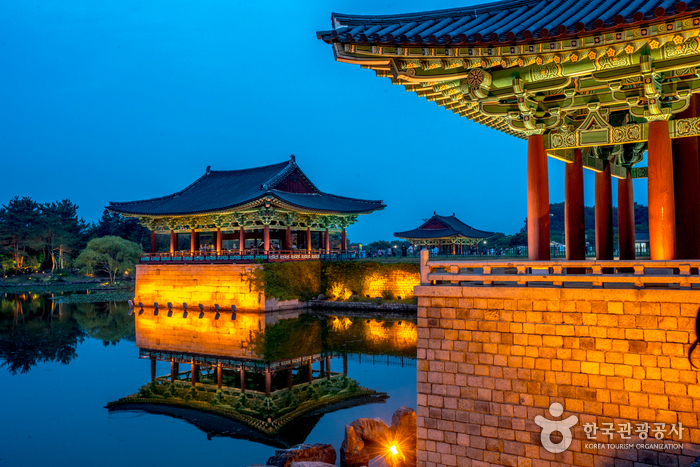
Donggung Palace and Wolji Pond (Anapji), Gyeongju
Historic Site · Gyeongju, Gyeongbuk
A detached palace and pond of Unified Silla located in Gyeongju, North Gyeongsang Province, known as Donggung and Wolji, also called Anapji. Said to have been constructed during the reign of King Munmu, it presents the appearance of a royal garden where a pond, pavilions, and landscape harmonize. Excavations have yielded diverse everyday artifacts offering insight into court life of the era. The nighttime reflection of the pavilions on the water is beautiful, making it one of Gyeongju's most beloved attractions.
Gameunsaji Temple Site and Tomb of King Munmu, Gyeongju
Historic Site · Gyeongju, Gyeongbuk
A temple site and royal tomb on the eastern coast of Gyeongju, North Gyeongsang Province, imbued with the aspirations of Silla as it completed the unification of the Three Kingdoms. Gameunsa was completed by King Sinmun in accordance with the wishes of King Munmu, and two imposing three-story stone pagodas remain. The underwater tomb of King Munmu (Daewangam) embodies his dying wish to become a dragon guardian of the nation. It is a historic site visited by many as a symbol of patriotism.
Cheonghaejin (Jangdo Island), Wando
Historic Site · Wando, Jeonnam
Located on Jangdo Island off the coast of Wando, South Jeolla Province, this is the site that served as Jang Bogo's base for maritime trade. Jang Bogo established Cheonghaejin here, suppressed pirates, and dominated the sea routes connecting Silla, Tang China, and Japan, earning him the title of 'King of the Sea.' Excavations have confirmed traces of wooden palisades and building foundations from that era. This place conveys the story of a hero of Korean maritime history and the golden age of sea trade.
- UNESCO
Buseoksa Temple, Yeongju
Buddhist Temple · Yeongju, Gyeongbuk
A temple on the slopes of Bonghwang Mountain in Yeongju, North Gyeongsang Province, said to have been founded by the monk Uisang as the head temple of the Hwaeom school. The main hall, Muryangsujeon, is one of the oldest surviving wooden buildings in Korea, displaying the beauty of Korean wooden architecture through its entasis columns and well-proportioned form. The legendary floating rock that gave the temple its name, along with the tale of Uisang and Seonmyo, are enshrined here. It has been inscribed on the UNESCO World Heritage List as a mountain monastery.
Balhae Gallery, National Museum of Korea
Museum · Yongsan, Seoul
An exhibition space for Balhae artifacts at the National Museum of Korea in Yongsan, Seoul, one of the very few places in the country where Balhae relics can be viewed. Most of the major Balhae sites, including its capital and tombs, lie within present-day China and Russia, making them inaccessible within Korea. Here, artifacts such as Buddhist statues, roof tiles, and pottery offer a glimpse into Balhae culture. It is a meaningful space that keeps alive the memory of Balhae, founded by Dae Joyeong, as part of Korean history.
Shangjing (Capital of Balhae) Ruins
Fortress / Capital Fortress · Overseas (Heilongjiang, China)
The fortress remains of Sanggyong Yongcheonbu, the capital of Balhae, located in present-day Heilongjiang Province, China. Traces of a rigidly grid-planned city modeled after Tang dynasty Chang'an remain, demonstrating the high level of Balhae civilization. The ruins of palace sites, temple sites, and city walls stretch across a vast area. It is a core site conveying the prosperity of Balhae, which was called the 'Flourishing State of the East'.
Tapnyeong-ri Seven-Story Stone Pagoda (Jungangtap), Chungju
Historic Site · Chungju, Chungbuk
A seven-story stone pagoda of the Unified Silla period in Chungju, North Chungcheong Province, the tallest surviving Unified Silla stone pagoda. It stands prominently on a flat plain along the South Han River, its imposing form visible from afar. It is widely known as the 'Central Pagoda' because it is said to have been erected at the geographic center of the country. It is a symbolic artifact demonstrating Unified Silla's territorial consciousness and the development of stone pagoda design.
Jinjeonsa Temple Site, Yangyang
Historic Site · Yangyang, Gangwon
A temple site in Yangyang, Gangwon Province, said to be the place where the monk Doui first introduced Seon (Chan) Buddhism upon returning from Tang China. Seon Buddhism, which emphasizes inner awakening, spread as a new current of thought in the late Silla period. A well-proportioned three-story stone pagoda remains at the site, conveying the Buddhist culture of the era. It is a historically significant site marking the beginning of Korean Seon Buddhism.
Gulsansa Temple Site, Gangneung
Historic Site · Gangneung, Gangwon
A temple site in Gangneung, Gangwon Province, founded by the monk Beomil and established as the base of Gulsanmun, one branch of Seon Buddhism. The site retains the largest danggan jiju (flagpole supports) in Korea, giving a sense of the temple's former scale. The remaining stupa and stone Buddha also convey the Buddhist culture of the time. It is a site that reflects the spread of Seon Buddhism into the regions during the late Silla period.
Taebong Capital Site, Cheorwon
Fortress / Capital Fortress · Cheorwon, Gangwon
A fortress site in Cheorwon, Gangwon Province, which served as the capital of Taebong, the state founded by Gung Ye. During the Later Three Kingdoms period, Gung Ye established his capital here and wielded great power, but ultimately yielded his throne to his subordinate Wang Geon. The fortress site straddles the Demilitarized Zone and is also a present-day site of division that cannot be easily approached. It is a place that conveys the turbulent history leading toward the unification of the Later Three Kingdoms.
Goryeo Palace Site, Ganghwa
Fortress / Capital Fortress · Ganghwa, Incheon
The site of a Goryeo palace in Ganghwa, Incheon, which served as a temporary royal capital when the court relocated in resistance to the Mongol invasions. Goryeo moved its capital to Ganghwa and held out against the Mongols for roughly forty years, making this its seat of government. Palaces and government offices were built on this small island to keep the state alive. It is an important stage of Goryeo history imbued with the will to resist the Mongol invasions.
- UNESCO
Haeinsa Temple Janggyeong Panjeon, Hapcheon
Buddhist Temple · Hapcheon, Gyeongnam
A temple on the slopes of Gaya Mountain in Hapcheon, South Gyeongsang Province, renowned for the Janggyeongpanjeon hall that stores the Tripitaka Koreana. Janggyeongpanjeon is regarded as a scientifically remarkable building that has preserved the wooden printing blocks intact for hundreds of years using natural wind and humidity. The Tripitaka Koreana housed within is an enormous collection of Buddhist scriptures that Goryeo produced in the hope of overcoming the Mongol invasions through the power of the Buddha. Both the building and the scriptures are inscribed on UNESCO World Heritage and Memory of the World registers.
Heungdeoksa Temple Site, Cheongju
Historic Site · Cheongju, Chungbuk
A temple site in Cheongju, North Chungcheong Province, where the Jikji — the world's oldest surviving book printed with movable metal type — was printed. Jikji predates Gutenberg's movable type and holds tremendous significance in the history of print culture. After it was established that Jikji was printed here, the value of this temple site was newly illuminated. Together with the Cheongju Early Printing Museum nearby, it conveys the pride of Korean printing culture.
- UNESCO
Bongjeongsa Temple, Andong
Buddhist Temple · Andong, Gyeongbuk
A temple on the slopes of Cheongdeung Mountain in Andong, North Gyeongsang Province, whose Geungnakjeon hall is known as the oldest surviving wooden building in Korea. The neat, simple gabled roof and column joinery beautifully represent the aesthetics of Goryeo wooden architecture. The quiet temple layout harmonizing with the mountain scenery conveys the atmosphere of an ancient mountain monastery. It has been inscribed on the UNESCO World Heritage List as a mountain monastery.
Eunjin Mireuk at Gwanchoksa Temple, Nonsan
Buddhist Temple · Nonsan, Chungnam
A temple on the slopes of Banya Mountain in Nonsan, South Chungcheong Province, famous for its enormous stone Maitreya bodhisattva statue known as the Eunjin Mireuk. This Goryeo-era statue is one of the largest stone Maitreya Buddhas in Korea, impressive for its large face and commanding scale. It well represents the characteristics of regional Goryeo Buddhist sculpture. It is a place where the Maitreya faith of the people who yearned for a new era is enshrined.
Goryeo Celadon Kiln Sites, Gangjin
Historic Site · Gangjin, Jeonnam
Goryeo celadon kiln sites in Gangjin, South Jeolla Province, which was the largest production center for Goryeo celadon including sanggam (inlaid) celadon. Kiln sites are distributed throughout the coastal villages, allowing one to imagine the old scenes of firing and shipping celadon. The jade-green celadon made here is regarded as a representative art form of the Goryeo period. The kiln sites can be explored alongside the Celadon Museum to experience the beauty of Goryeo celadon.
Ingaksa Temple, Gunwi
Buddhist Temple · Gunwi, Gyeongbuk
A temple on the slopes of Hwa Mountain in Gunwi, North Gyeongsang Province, said to be where the monk Iryeon wrote and completed the Samguk Yusa. The Samguk Yusa is a precious historical work that broadly encompasses the Dangun myth and ancient tales and Buddhist legends. The temple preserves a stupa and stele in memory of Iryeon, conveying traces of his life. It holds deep significance as the birthplace of the book that has transmitted ancient Korean history and mythology to the present day.
Beopcheonsa Temple Site, Wonju
Historic Site · Wonju, Gangwon
The site of a large Goryeo-era temple in Wonju, Gangwon Province, where traces of the ancient monastery complex remain on a wide expanse of land. The Jigwang National Master Stupa and its stele at this site are evaluated as masterworks that demonstrate the excellence of Goryeo stone sculpture art with their intricate carvings. The scale and layout of the temple precinct are being revealed through excavation and restoration. It is a historic site conveying the level of Goryeo Buddhist culture and the prestige of its monasteries.
Geodonsa Temple Site, Wonju
Historic Site · Wonju, Gangwon
The former site of Geodonsa Temple in Wonju, Gangwon Province, where a once-flourishing Goryeo-period temple fell into ruin, leaving only the empty ground behind. Said to have been founded in the late Silla to early Goryeo period, the traces of the ancient monastery layout are laid bare across the wide empty site. The quiet atmosphere offered by the neatly maintained empty space has made it a beloved spot for photography. A well-proportioned three-story stone pagoda and the stele of National Master Wongong remain, conveying the face of Goryeo stone art.
Gyeongbokgung Palace
Palace · Jongno, Seoul
The principal palace of the Joseon dynasty, located in Jongno, Seoul, built by Taejo Yi Seonggye upon moving the capital to Hanyang. The founding meritorious subject Jeong Dojeon laid out the palace and named its halls, and it was also the stage where King Sejong created Hangul and pursued scientific governance. After burning down during the Imjin War, it was rebuilt under the direction of Heungseon Daewongun during the reign of King Gojong. Magnificent halls including Geunjeongjeon, Gyeonghoeru, and Hyangwonjeong remain, and it is well known as the backdrop of the dramas 'Tree with Deep Roots' and 'Dragon Tears' as well as the stories of Jang Yeong-sil's scientific inventions.
- UNESCO
Changdeokgung Palace and Secret Garden
Palace · Jongno, Seoul
A Joseon palace in Jongno, Seoul, noted for being designed to harmonize with the natural topography rather than imposing upon it, earning it UNESCO World Heritage inscription. Founded as a secondary palace during the reign of King Taejong, it served as the de facto principal palace for a long period following the Imjin War. Elegant halls such as Injeongjeon and Daejojeon remain as the finest examples of Joseon palace architecture. In particular, the rear garden (Biwon) displays the essence of Korean garden design, where valleys, ponds, and pavilions blend in harmony.
Changgyeonggung Palace
Palace · Jongno, Seoul
A Joseon palace in Jongno, Seoul, originally built as a residential space for elder members of the royal family. It was reorganized during the reign of King Seongjong and was connected to Changdeokgung, together forming the East Palace complex. It is well known as the tragic stage where King Yeongjo had his son Prince Sado locked in a rice chest. Halls including Myeongjeongjeon and a large garden remain, making it pleasant to stroll while recalling the historical backdrop of the film 'Sado'.
Deoksugung Palace
Palace · Jung-gu, Seoul
A palace in the heart of Jung-gu, Seoul, originally used as a temporary refuge after the Imjin War and later becoming Emperor Gojong's imperial palace during the Korean Empire. It was the central stage of diplomacy and politics during the turbulent era of modernization. Traditional halls and the Western-style Seokjojeon building coexist in the same space, showing a scene from the transitional period toward modernity. It is also beloved for its stone wall path, the changing of the royal guard ceremony held every hour, and the atmosphere of the drama 'Mr. Sunshine'.
- UNESCO
Jongmyo Shrine
Historic Site · Jongno, Seoul
A royal shrine in Jongno, Seoul, housing the spirit tablets of the successive kings and queens of the Joseon dynasty, and the foremost ritual space of the Confucian state. The long and dignified Jeongjeon and Yeongnyeongjeon halls display a restrained architectural beauty. The Jongmyo Jerye (royal ancestral rites) and Jongmyo Jeoryeak (ritual music) are transmitted to the present day. The architecture, rites, and ritual music are jointly inscribed on the UNESCO World Heritage List, recognizing their outstanding value.
- UNESCO
Hwaseong Fortress and Haenggung Palace, Suwon
Fortress / Capital Fortress · Suwon, Gyeonggi
A castle city of the late Joseon period in Suwon, Gyeonggi Province, built by King Jeongjo as a planned city when he relocated the tomb of his father, Crown Prince Sado. Technologies of the era, including the geojunggi (pulley crane) devised by Jeong Yakyong, were mobilized for its efficient construction. Hwaseong Haenggung, where Jeongjo resided, remains alongside the fortress walls. The well-articulated vision of a new city combining military, commercial, and administrative functions is clearly expressed, earning it UNESCO World Heritage inscription. It is also familiar as the backdrop of the dramas 'Yi San' and 'The Red Sleeve'.
- UNESCO
Namhansanseong Fortress
Fortress / Capital Fortress · Gwangju, Gyeonggi
A mountain fortress of the Joseon period built on the hills of Gwangju, Gyeonggi Province, using the rugged terrain as a defensive stronghold protecting the capital. It is famous as the place where King Injo took refuge and held out against the Qing army during the Byeongja War. The walls following the mountain terrain, Sueojangtae (command post), and a detached palace remain. A well-maintained fortress trail that winds through the mountain village is in place, and it is inscribed on the UNESCO World Heritage List.
Seoul City Wall (Hanyangdoseong)
Fortress / Capital Fortress · Seoul
The fortress walls that surrounded Hanyang, the Joseon capital, built by Taejo Yi Seonggye to defend the capital after moving there. The walls run along the ridgelines connecting Bugaksan, Inwangsan, Naksan, and Namsan mountains. The manner of construction changed over the ages, and the shape and size of the stones allow one to read changes in the periods of construction. The well-maintained fortress promenade trail that looks down over the city center is beloved as a spot for walks and night views.
- UNESCO
Royal Tombs of the Joseon Dynasty
Royal Tomb · Seoul Metropolitan Area
The tombs of Joseon kings and queens scattered across the Seoul metropolitan area, with representative examples including Donggureung and Seonjeongneung. They are characterized by sites chosen and precincts laid out according to geomancy (feng shui) and Confucian rites. The burial mounds, jeongjakgak (T-shaped memorial halls), and stone figures are well preserved. The entire body of Joseon royal tombs is inscribed together on the UNESCO World Heritage List, and they are also enjoyed as forest trails within the city.
- UNESCO
Jangneung Royal Tomb and Cheongnyeongpo, Yeongwol
Royal Tomb · Yeongwol, Gangwon
A historic site in Yeongwol, Gangwon Province, comprising King Danjong's royal tomb and his place of exile. Cheongnyeongpo, where Danjong — who had the throne stripped from him at a young age — was sent in exile to Yeongwol, and Jangneung, laid out after his tragic death, are both preserved here. The isolated landscape of Cheongnyeongpo surrounded by the river evokes Danjong's plight. Jangneung is included among the UNESCO-inscribed Joseon royal tombs, and it also connects to the historical backdrop of the film 'Face Reader'.
- UNESCO
Hahoe Folk Village, Andong
Folk Village · Andong, Gyeongbuk
A Joseon clan village in Andong, North Gyeongsang Province, where the Pungsan Ryu clan has lived for generations. It is home to the ancestral house of Ryu Seongnyong, who led the nation as Chief State Councillor during the Imjin War. The old appearance of tile-roofed houses and thatched cottages blending together is well preserved, along with the geographic feature of the river wrapping around the village. As the place where the Hahoe Byeolsingut Talnori (masked dance ritual) is transmitted, living aristocratic culture and folk customs earned it UNESCO World Heritage inscription.
- UNESCO
Yangdong Folk Village, Gyeongju
Folk Village · Gyeongju, Gyeongbuk
A Joseon-era aristocratic clan village in Gyeongju, North Gyeongsang Province, where the Yeogang Yi clan and the Wolseong Son clan have lived together as a traditional village. It is characterized by the arrangement of tile-roofed houses for the nobility and thatched cottages in fitting positions along the gentle hillsides. Clan houses, garden pavilions, and village schools of aristocratic families are well preserved. Retaining the complete form of a Korean traditional village, it is inscribed on the UNESCO World Heritage List.
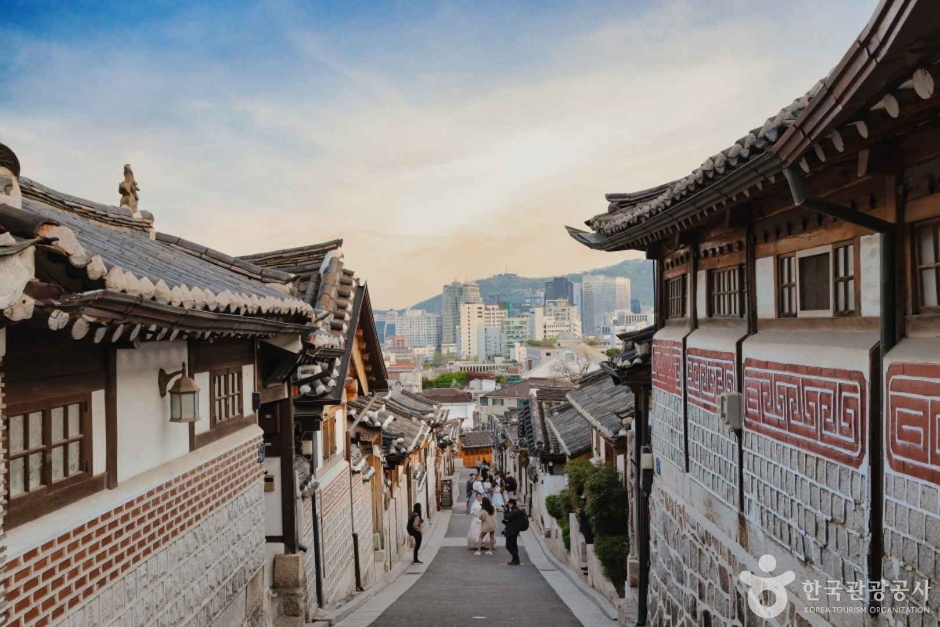
Bukchon Hanok Village, Seoul
Folk Village · Jongno, Seoul
A densely packed hanok (traditional Korean house) area in Jongno, Seoul, located between Gyeongbokgung and Changdeokgung. It derives from the neighborhood where high-ranking officials and literati of the Joseon period gathered to live. The tile-roofed houses lining the alleyways retain a traditional texture amidst the city center. The view from the hillside where the urban landscape overlaps beyond hanok rooftops draws visitors, making it a beloved spot for strolls and photography.
- UNESCO
Dosanseowon Confucian Academy, Andong
Seowon (Confucian Academy) · Andong, Gyeongbuk
A Joseon Confucian academy in Andong, North Gyeongsang Province, built to honor the great scholar Toegye Yi Hwang and carry on his learning. It grew from Dosan Seodang, the village school where Yi Hwang taught his students, and was expanded into an academy after his death. The lecture and ritual spaces are neatly arranged, showing the model of a Neo-Confucian educational institution. It is inscribed on the UNESCO World Heritage List as one of the Korean Confucian academies.
- UNESCO
Byeongsanseowon Confucian Academy, Andong
Seowon (Confucian Academy) · Andong, Gyeongbuk
A Joseon Confucian academy in Andong, North Gyeongsang Province, enshrining Ryu Seongnyong, who guided the nation during the Imjin War. The arrangement drawing in the view of mountains and river spread before it from Mandaeru, the lecture space, is particularly noteworthy. It is considered a masterpiece of Korean Confucian academy architecture, where nature and architecture harmonize beautifully. It is inscribed on the UNESCO World Heritage List as one of the Korean Confucian academies.
- UNESCO
Sosuseowon Confucian Academy, Yeongju
Seowon (Confucian Academy) · Yeongju, Gyeongbuk
The first royally chartered Confucian academy of the Joseon period, located in Yeongju, North Gyeongsang Province, which received a royal plaque and land from the king and was officially recognized. It enshrines An Hyang, who introduced Neo-Confucianism from Yuan-dynasty China in the late Goryeo period. It served as the starting point from which the seowon system, as a private educational institution, took root in earnest. The lecture hall, shrine, and pine forest are in harmony, and it is inscribed on the UNESCO World Heritage List as one of the Korean Confucian academies.
- UNESCO
Donamseowon Confucian Academy, Nonsan
Seowon (Confucian Academy) · Nonsan, Chungnam
A Joseon Confucian academy in Nonsan, South Chungcheong Province, honoring scholars of the Giho school who were versed in the study of ritual propriety. Centered on Kim Jangsaeng, it is regarded as the heartland of the study of ritual propriety, and connects to the academic lineage of later scholars such as Song Siyeol. The lecture and ritual spaces are arranged with proper decorum. It is inscribed on the UNESCO World Heritage List as one of the Korean Confucian academies.
- UNESCO
Museongseowon Confucian Academy, Jeongeup
Seowon (Confucian Academy) · Jeongeup, Jeonbuk
A Joseon Confucian academy in Jeongeup, North Jeolla Province, enshrining Choe Chiwon, the great Silla scholar. It is particularly significant for the role it played as a hub of local self-governance and community edification. Its location close to the village clearly shows its character as a village academy. It is inscribed on the UNESCO World Heritage List as one of the Korean Confucian academies.
Hyeonchungsa Shrine, Asan
Memorial Hall · Asan, Chungnam
A shrine in Asan, South Chungcheong Province, dedicated to Admiral Yi Sunsin, the great military commander known as Chungmugong. The former house where Yi Sunsin lived before passing the military examination and an archery range are also located here, allowing one to trace the footsteps of his life. It is a site dedicated to commemorating the loyalty of the hero who saved the nation during the Imjin War. It conveys related artifacts including the 'Nanjung Ilgi' (War Diary), and the traces of the figure made familiar through the films 'Roaring Currents' and the drama 'Immortal Yi Sunsin' can be encountered here.
Hansan Island and Three-Province Naval Command, Tongyeong
Historic Site · Tongyeong, Gyeongnam
This is Hansando, an island in the sea off Tongyeong, Gyeongsangnam-do, and the site of the Samdo Sugun Tongjeyeong (Naval Command of the Three Provinces) located there. It is the sea where Yi Sun-sin won a great victory over the Japanese forces at the Battle of Hansando during the Imjin War, and the place where the headquarters of the Joseon navy was established. The island, the sea, and Jeseungdang come together to convey the atmosphere of the naval base of that time. It is well known as the setting of the film 'Hansan: Rising Dragon'.
Jinnamgwan, Yeosu
Historic Site · Yeosu, Jeonnam
This is a large Joseon-era guesthouse (gaeksa) building in Yeosu, Jeollanam-do, on the site where the headquarters of the Jeolla Left Naval Command stood during the Imjin War. It holds deep significance as the military base from which Yi Sun-sin commanded the navy. The grandeur of the long, single-story wooden building well illustrates the scale of old government office architecture. It is also one of the settings in the story of Yi Sun-sin that leads into the film 'Noryang: Deadly Sea'.
Haengjusanseong Fortress, Goyang
Fortress / Capital Fortress · Goyang, Gyeonggi
This is a mountain fortress located on a low hill in Goyang, Gyeonggi-do, and the site of the Battle of Haengju, one of the three great victories of the Imjin War. It is said to be the place where General Gwon Yul, gathering a small force together with the strength of the common people, drove back the superior Japanese army. Along the ridge overlooking the Han River, the fortress walls and commemorative facilities have been maintained. It calls to mind a scene from the Imjin War as depicted in the drama 'Jingbirok'.
Jinjuseong Fortress
Fortress / Capital Fortress · Jinju, Gyeongnam
This is a fortress built along the banks of the Namgang River in Jinju, Gyeongsangnam-do, and the stage of the Battle of Jinju during the Imjin War. It is the fierce battleground where General Kim Si-min held off a great army with a small force, and also a place where a desperate, valiant defense subsequently unfolded. The fortress walls running along the river, Chokseongnu Pavilion, and Uiam Rock honoring Nongae remain. It is cherished as a noted site that preserves the tragic, poignant history of the Imjin War.
Chilbaek Memorial, Geumsan
Memorial Hall · Geumsan, Chungnam
This is a tomb of righteous fighters (uibyeong) in Geumsan, Chungcheongnam-do, where the 700 volunteer soldiers who fought alongside Jo Heon and died as martyrs during the Imjin War are enshrined and honored together. It conveys the spirit of common people, not regular troops, who rose up as a volunteer army to defend the country. The burial mound, shrine, and memorial hall have been maintained, forming a space of remembrance. It is a historic site that brings to mind the poignant heroism of the volunteer army history of the Imjin War.
Ojukheon House, Gangneung
Historic Residence · Gangneung, Gangwon
This is an old Joseon-era house in Gangneung, Gangwon-do, said to be the birthplace where Sin Saimdang and her son Yulgok Yi I were born. As there is much black bamboo around the house, it was given the name Ojukheon ('black bamboo pavilion'). It holds deep significance as the place where a scholar and an artist who represent the mid-Joseon period grew up together. An elegant detached annex (byeoldang) and garden remain, and it is a noted site well suited to recalling the drama 'Saimdang, Light's Diary'.
Soswaewon Garden, Damyang
Historic Residence · Damyang, Jeonnam
A representative detached villa garden (byeolseo) of the Joseon dynasty located in Damyang, Jeollanam-do, distinguished by the way it preserves the natural valley almost entirely as it was. It is a place where a scholar who shunned officialdom and lived in seclusion set a pavilion and walls amid the mountains and streams. The flowing water, bamboo grove, and the Gwangpunggak and Jewoldang pavilions blend together to show the very essence of Korean garden beauty. It is also known as a spiritual stage frequented by literati such as Songgang Jeong Cheol, who brought gasa literature into full bloom.
Nogudang House, Haenam
Historic Residence · Haenam, Jeonnam
A traditional old house (gotaek) of the Joseon dynasty located in Haenam, Jeollanam-do, the head house of the family of Gosan Yun Seon-do, a poet and scholar. It is a place imbued with the literature and the traces of the life of Yun Seon-do, well known for 'Eobusasisa' (Fisherman's Calendar Songs), a sijo cycle that sang of nature. The hanok that has kept its place through long years is in harmony with the Torreya nucifera (Japanese nutmeg-yew) forest on the hill behind it. Documents and relics handed down within the family remain, conveying the culture of a Joseon scholar-official household.
Gyeonggijeon Shrine and Hanok Village, Jeonju
Historic Site · Jeonju, Jeonbuk
A relic of the Joseon dynasty located in Jeonju, Jeollabuk-do, an enshrinement hall (jinjeon) housing the royal portrait of King Taejo Yi Seong-gye. It is a space that honored the authority of the founding monarch in Jeonju, the ancestral seat of the dynasty. The main hall enshrining the royal portrait and its annexed buildings are neatly arranged. Blending with the nearby Jeonju Hanok Village, it is a renowned spot good for strolling while sensing the atmosphere of tradition.
Geumseonggwan, Naju
Historic Site · Naju, Jeonnam
A government guesthouse (gaeksa) of the Joseon dynasty located in Naju, Jeollanam-do, an administrative office building that governed the outlying region. As Naju was the foremost large county in Jeolla-do, its guesthouse was likewise high in rank and large in scale. It shows its standing as a space that enshrined the jeonpae (a wooden tablet symbolizing the king) and received envoys. The spacious courtyard and the neat wooden architecture convey the prestige of the old county.
Yeongnamnu Pavilion, Miryang
Historic Site · Miryang, Gyeongnam
A pavilion (nugak) of the Joseon dynasty perched atop a riverside cliff in Miryang, Gyeongsangnam-do, renowned for its outstanding scenery. It is counted among the foremost pavilions of Joseon, together with Chokseongnu in Jinju and Bubyeongnu in Pyongyang. The refreshing view that overlooks the river and the fields at a single glance is exquisite. The poetry plaques of old literati hung on the pavilion blend with the dancheong (decorative painting) to evoke an elegant atmosphere.
Dasan Historic Site, Namyangju
Memorial Hall · Namyangju, Gyeonggi
A historic site of Dasan Jeong Yak-yong located in Namyangju, Gyeonggi-do, where his birthplace, in which he was born and spent his later years, lies together with his tomb. Jeong Yak-yong was a leading scholar of the late Joseon period who synthesized Silhak (Practical Learning) and devised the geojunggi (a pulley-crane device) used in the construction of Suwon Hwaseong Fortress. At his birthplace Yeoyudang and the memorial hall, one can examine his vast body of writings and his thought. The historic site, laid out along the river, is beloved as a spot for strolling and field study.
- UNESCO
Songgwangsa and Seonamsa Temples, Suncheon
Buddhist Temple · Suncheon, Jeonnam
A mountain temple located in Suncheon, Jeollanam-do, encompassing Songgwangsa and nearby Seonamsa. Songgwangsa is counted as a Sangha Jewel temple that produced many great monks in Korean Buddhism, and it was the stage where Jinul carried out Buddhist reform through the Suseonsa reform movement in the Goryeo period. The temple complex set deep in the mountain foothills and its annexed hermitages continue on neatly. It has been inscribed on the UNESCO World Heritage List as one of the Sansa, Buddhist Mountain Monasteries in Korea.
- UNESCO
Beopjusa Temple, Boeun
Buddhist Temple · Boeun, Chungbuk
A mountain temple situated at the foot of Songnisan in Boeun, Chungcheongbuk-do. Palsangjeon, a multi-storied wooden building, is counted among the representative wooden pagodas remaining in our country. The spacious temple complex harmonizing with the mountain terrain, together with the large Buddha statue, creates a majestic atmosphere. It has been inscribed on the UNESCO World Heritage List as one of the Sansa, Buddhist Mountain Monasteries in Korea.
- UNESCO
Tongdosa Temple, Yangsan
Buddhist Temple · Yangsan, Gyeongnam
A mountain temple situated below Yeongchuksan in Yangsan, Gyeongsangnam-do, counted as a Buddha Jewel temple that enshrines the authentic relics of the Buddha (jinsin sari). It is said to have been founded by the Vinaya master Jajang in the Silla period, and because it enshrines the relics, a distinctive feature is that no separate Buddha statue is placed inside the main hall, the Daeungjeon. Various halls and hermitages stretch out in a long line along the mountain foothills. It has been inscribed on the UNESCO World Heritage List as one of the Sansa, Buddhist Mountain Monasteries in Korea.
Jungmyeongjeon, Deoksugung, Seoul
Modern Architecture · Jung-gu, Seoul
A modern building located beside Deoksugung Palace in Jung-gu, Seoul, this Western-style structure served as the imperial library and an auxiliary hall during the Korean Empire period. It is the tragic site where the Eulsa Treaty, which stripped Korea of its diplomatic sovereignty under Japanese coercion, was forcibly concluded in 1905. Inside the red-brick building, an exhibition conveys the circumstances of that time. It is a historical space that prompts reflection on the final struggles of Emperor Gojong and the Korean Empire.
Hwangudan Altar, Seoul
Historic Site · Jung-gu, Seoul
A historic site in the city center of Jung-gu, Seoul, this is the altar of heaven where Gojong, upon ascending the throne as emperor and proclaiming the Korean Empire, performed rites to Heaven. It is a symbolic space embodying the resolve to establish the standing of an imperial state. The original altar has disappeared, but Hwangungu, where the spirit tablets were enshrined, and the seokgo (stone drums), among others, remain. It holds deep significance as a place that conveys the history of the founding of the Korean Empire amid the city center.
Unhyeongung Palace, Seoul
Modern Architecture · Jongno, Seoul
A royal residence of the modern era located in Jongno, Seoul, this was the dwelling of Heungseon Daewongun, the father of Gojong. It is the place where the young Gojong grew up before ascending the throne, and the center of power from which the Daewongun controlled the political situation. Dignified hanok such as Noandang and Irodang are well preserved. As a stage of late Joseon politics, it is a fine place to tour while recalling the setting of the drama 'Empress Myeongseong'.
Gwangseongbo and Chojijin Forts, Ganghwa
Fortress / Capital Fortress · Ganghwa, Incheon
Late Joseon garrison fortifications situated along the coast of Ganghwado Island in Incheon, with Gwangseongbo and Chojijin being the most representative. As military fortresses that defended against foreign invasions, they are the sites where fierce battles were fought against the French and American forces during the French Campaign (Byeonginyangyo) and the American Campaign (Sinmiyangyo). The fortress walls overlooking the sea, along with the gun batteries and dondae (sentry posts), remain and show the defensive system of the time. It is a place that conveys Heungseon Daewongun's policy of refusing trade and the turbulence surrounding the opening of the ports.
Incheon Open Port Modern Culture Street
Modern Architecture · Jung-gu, Incheon
A modern cultural street from the port-opening era located in Jung-gu, Incheon. Centered on the early-opened port, it preserves a landscape where foreign-style buildings such as consulates, banks, and shops were established. The traces of the old Chinese and Japanese concessions blend with Western-style buildings to convey the atmosphere of the port-opening era. It is a noted spot where you can glimpse this turbulent transitional period while walking along the modern architectural cluster and alleyways.
Gunsan Modern Culture Street
Modern Architecture · Gunsan, Jeonbuk
A modern cultural street in Gunsan, North Jeolla, a place where the traces remain of a port city that served as a conduit for rice extraction during the Japanese colonial period. Colonial-era architecture such as the old customs house, banks, and Japanese-style houses is preserved throughout the streets. It forms a unique landscape where the painful history of exploitation coexists with modern architecture. It is also a beloved exploration spot for its exhibitions and cafés that make use of the old buildings.
Mokpo Modern History Museum
Modern Architecture · Mokpo, Jeonnam
A modern historical space in Mokpo, South Jeolla, where heritage from the port-opening era, including the old Japanese consulate building, is gathered. As a port city that opened early, traces of the modern and colonial periods linger strongly in its streets. Modern architecture such as the red-brick old consulate conveys the landscape of that time. Walking along the modern streets that unfold beside the harbor, one can trace back through history.
Donghak Peasant Revolution Memorial Hall and Hwangtohyeon, Jeongeup
Memorial Hall · Jeongeup, Jeonbuk
A commemorative space for the Donghak Peasant Revolution in Jeongeup, North Jeolla, comprising the battle sites and a memorial hall in the Hwangtohyeon area. It is the central stage of the Donghak Peasant Movement, in which the people rose up against corrupt officials and foreign powers. Through its exhibitions, it conveys the traces and spirit of the peasant army, including Jeon Bong-jun. It is a notable site for reflecting on the history of this popular uprising, also known through the drama 'Nokdu Flower'.
Seodaemun Prison History Hall
Memorial Hall · Seodaemun, Seoul
A history museum preserving the former prison in Seodaemun, Seoul. It is a prison where countless independence activists were imprisoned and endured hardship during the Japanese colonial period, and it is also well known as the place where the martyr Yu Gwan-sun died in prison. The red-brick cell blocks, torture rooms, and execution ground remain intact, bearing witness to the atrocities of colonial rule. As the backdrop of the film 'Resistance: The Yu Gwan-sun Story', it is a memorial space honoring the sacrifices of the independence movement.
Independence Hall of Korea, Cheonan
Memorial Hall · Cheonan, Chungnam
A memorial hall in Cheonan, South Chungcheong, that comprehensively addresses the history of the independence movement. Across multiple exhibition halls, it broadly presents the process of Japanese aggression and our nation's independence movement that resisted it. On a vast site, symbolic monuments and several exhibition halls are arranged in harmony. In one place, one can examine the course of the independence movement, from the righteous army struggles to the March 1st Movement, the Provisional Government, and the armed resistance.
Yu Gwan-sun Historic Site and Aunae Marketplace, Cheonan
Memorial Hall · Cheonan, Chungnam
A historic site related to the martyr Yu Gwan-sun in Cheonan, South Chungcheong, comprising the Aunae Marketplace and a memorial pavilion, among others. It is the very site where, in 1919, Yu Gwan-sun took the lead in leading the Manse demonstration at this Aunae Marketplace. Her birthplace and memorial facilities have been maintained, conveying her life and sacrifice. It is a symbolic site of the March 1st Movement, also recalled through the film '1919 Yu Gwan-sun'.
Tapgol Park, Seoul
Memorial Hall · Jongno, Seoul
An urban park in Jongno, Seoul, the birthplace where, during the March 1st Movement of 1919, the Declaration of Independence was read aloud and the Manse demonstrations began. It became the starting point from which students and citizens gathered, shouting Manse, and the movement spread nationwide. Within the park stand a bas-relief carved with scenes of the March 1st Movement and a statue of Son Byong-hui, among others. It is a deeply meaningful space, in the very heart of the city, for recalling the first cry of the independence movement.
Hyochang Park, Seoul
Memorial Hall · Yongsan, Seoul
A park in Yongsan, Seoul, serving as a memorial space where the burial grounds of those who devoted themselves to the independence movement are located. Here lie the tombs of Baekbeom Kim Gu, who led the Provisional Government, together with those of the three patriots Yi Bong-chang, Yun Bong-gil, and Baek Jeong-gi. It was established as a sacred site honoring the independence activists who gave their lives for the nation. With its forest and burial grounds blending together within the city, it is a notable spot well suited for both strolling and remembrance.
Ahn Jung-geun Memorial Hall (Namsan)
Memorial Hall · Jung-gu, Seoul
The An Jung-geun Memorial Hall located at the foot of Namsan in Seoul. It is a place honoring the life and thought of An Jung-geun, who in 1909 in Harbin executed Ito Hirobumi, the ringleader of the invasion. The course of his heroic deed, the writings he left in prison, and his calligraphy can be encountered through the exhibits. It is a space commemorating a symbolic figure of the independence movement, also evoked by the film 'Hero,' based on the original musical.
Baekbeom Kim Gu Memorial Hall and Gyeonggyo-jang
Memorial Hall · Yongsan/Jongno, Seoul
A memorial space in Seoul related to Baekbeom Kim Gu, comprising the Kim Gu Memorial Hall and Gyeonggyojang, where he stayed and passed away. It is a place imbued with the traces of Kim Gu, who devoted his entire life to the independence movement as the chairman leading the Provisional Government of the Republic of Korea. It conveys his final moments, when, after striving for reunification following liberation, he fell to an assassin's bullet at Gyeonggyojang. Through the exhibits one can examine his thought and activities, retracing the turbulent modern history.
Imcheonggak House, Andong
Historic Residence · Andong, Gyeongbuk
A head family residence of the Joseon era in Andong, North Gyeongsang Province, an old house well known as the cradle of a distinguished family of the independence movement. It is the home base of a family that produced numerous independence activists, including Yi Sang-ryong, who served as the first State Councilor of the Provisional Government of the Republic of Korea. It is imbued with the spirit of a family that devoted itself to the independence movement, liquidating its estate to go into exile in Manchuria. Along with the dignity of the venerable hanok, it is revered as an emblem of noblesse oblige.
Imjingak Pavilion and Pyeonghwa-nuri Park
Security / Peace · Paju, Gyeonggi
A symbolic site of division in Paju, Gyeonggi Province, situated at the gateway leading to the Demilitarized Zone. It was a place where displaced people who lost their hometowns in the Korean War soothed their longing for home. The severed railway bridge, the Bell of Peace, and the vast Pyeonghwa-Nuri Park together convey the pain of division and the yearning for peace. It is a notable spot that recalls the sorrow of family separation depicted in the film 'Ode to My Father.'
DMZ and Panmunjom (JSA)
Security / Peace · Paju, Gyeonggi
The Demilitarized Zone in Paju, Gyeonggi Province, and within it Panmunjeom (the Joint Security Area). It is the frontline of the division of the Korean Peninsula, where the armistice regime of the Korean War is maintained intact. The Military Demarcation Line where North and South face each other and the conference hall buildings show the reality of tension and confrontation. It is a symbolic site of the situation on the Korean Peninsula, prompting one to reflect on division and peace at the same time.
UN Memorial Cemetery, Busan
Security / Peace · Nam-gu, Busan
The UN Memorial Cemetery in Nam-gu, Busan, a burial ground where the UN forces' soldiers who fell in the Korean War rest. As the only UN forces' cemetery in the world, soldiers from various participating countries rest in eternal peace together here. Neatly tended grassy burial grounds and memorial facilities of each nation are blended together. It is a memorial space that prompts one to reflect together on the tragedy of war and the meaning of international solidarity.
Busan Provisional Capital Memorial Museum
Memorial Hall · Seo-gu, Busan
The Provisional Capital Memorial Hall in Seo-gu, Busan, a place that conveys the history of the time when Busan was the provisional capital during the Korean War. It shows the period when, after the capital fell to the war, the government moved to Busan and continued its resistance. Through the exhibits one can encounter the life and politics of the refuge era, including the building used as the presidential residence at the time. It is a notable spot where one can retrace the appearance of Busan as the turbulent wartime capital.
Geoje POW Camp Historic Park
Security / Peace · Geoje, Gyeongnam
A relic park of a prisoner-of-war camp in Geoje, South Gyeongsang Province. It is the site where a camp that held North Korean and Chinese Communist prisoners on a large scale during the Korean War once stood. It conveys another facet of the war, such as the ideological conflicts and disturbances that took place inside the camp. Through the barracks and exhibits, one can vividly recall the wounds left by division and war.
May 18th Memorial Park and National Cemetery, Gwangju
Memorial Hall · Gwangju
A memorial space related to May 18 in Gwangju, consisting of the Memorial Park and the May 18th National Cemetery. It is a place honoring the May 18 Democratization Movement, in which the citizens of Gwangju cried out for democracy against the oppression of the new military regime in 1980. The burial grounds where the victims rest and the memorial facilities convey the pain and spirit of that day. Its related records have been inscribed as a Memory of the World, and it is a site of modern history widely known also through the film 'A Taxi Driver.'
National April 19th Democracy Cemetery, Seoul
Memorial Hall · Gangbuk, Seoul
The April 19th National Cemetery in Gangbuk, Seoul, a burial ground where the victims of the April 19 Revolution of 1960 rest. It is a place honoring the democratic revolution in which students and citizens rose up against electoral fraud and dictatorship and toppled the regime. The tombs of the victims, the memorial tower, and the memorial hall convey the cry of that day. It is a memorial space that commemorates the spirit of April 19, regarded as the starting point of Korean democracy.
Freedom Park and Incheon Landing Operation Memorial, Incheon
Security / Peace · Jung-gu, Incheon
Jayu Park and the Incheon Landing Operation Memorial Hall in Jung-gu, Incheon. It is a space honoring the Incheon Landing Operation, which reversed the course of the Korean War in a single stroke. Jayu Park, where the statue of General MacArthur, who commanded the operation, stands, and the memorial hall showing the unfolding of the operation are located together. From the hill overlooking the sea, one can reflect on the decisive moment that changed the course of the war.
- UNESCO
Namsan Mountain in Gyeongju
Historic Site · Gyeongju, Gyeongbuk
Namsan Mountain in Gyeongju, rising approximately 468 meters in the southern part of the city, is called an open-air museum where a millennium of Silla Buddhist faith is inscribed across the entire mountain. From the Silla period through Unified Silla, rock-carved Buddhas, stone Buddhas, stone pagodas, and temple sites were created throughout the valleys and ridges, with over 100 Buddhist relics distributed across the mountain. Representative sites include the Chilburam rock-carved Buddha group and the three-story stone pagoda of Yongjangsa Valley. The mountain itself embodies the faith and artistry of the Silla people, and it is registered as a UNESCO World Heritage Site as part of the Gyeongju Historic Areas.
Sudeoksa Temple in Yesan
Buddhist Temple · Yesan, Chungnam
Sudeoksa is a temple located on the slopes of Deokseungsan Mountain in Yesan-gun, South Chungcheong Province, with a long history said to have been founded during the Baekje period. The greatest attraction is the Daeungjeon main hall, built in 1308 during the reign of King Chungnyeol of Goryeo, one of the finest extant wooden structures with a clearly established construction date, and designated as a National Treasure. The neat and stable proportions of the gabled roof and column-top bracket system beautifully demonstrate the aesthetics of Goryeo wooden architecture. Sudeoksa also served as an important center for Seon Buddhism and produced numerous eminent monks throughout the Joseon period.
Sajikdan Altar in Seoul
Historic Site · Jongno, Seoul
Sajikdan is a royal altar of the Joseon Dynasty located in Jongno-gu, Seoul, where ceremonies were held to pray to the god of earth (sa) and the god of grain (jik) for abundant harvests and national peace. It was established in 1395, early in the founding of Joseon, when Hanyang was designated as the capital, following the principle of placing Jongmyo on the left and Sajik on the right of Gyeongbokgung Palace. It consists of two square altars, the sa altar and the jik altar, reflecting the centrality of agriculture to Joseon society and the state's aspirations for the welfare of its people. Today, reenactments of the Sajik Daeje ceremony are held here.
Sungkyunkwan and Munmyo Shrine
Historic Site · Jongno, Seoul
Sungkyunkwan, located in Jongno-gu, Seoul, was the highest educational institution of the Joseon Dynasty, a national school that taught Confucianism and cultivated talented individuals. The space is divided into the Munmyo shrine (Daeseongjeon), where the spirit tablets of Confucius and ancient sages are enshrined, and the Myeongnyundang lecture hall, where students studied. Every spring and autumn, the Seokjeon Daeje ceremony honoring Confucius and other sages is held at Daeseongjeon, and its rituals, music, and dance are important intangible cultural heritage. Sungkyunkwan still functions as a university today, preserving this 600-year-old tradition.
Dasan Chodang in Gangjin
Historic Site · Gangjin, Jeonnam
Dasan Chodang is the place of exile and scholarly cradle of the late Joseon Silhak scholar Jeong Yak-yong, located on the slopes of Mandeoksan Mountain in Gangjin-gun, South Jeolla Province. Jeong Yak-yong was exiled to Gangjin following the Sinyu Persecution of 1801 and remained for 18 years, teaching students and conducting extensive scholarly activities. His representative works summarizing Practical Learning, including Mongminsimseo, Gyeongseyu-pyo, and Heumheumsinseo, were completed right in this thatched cottage. Around the cottage are the Jeongseok rock he personally tended and the Yakcheon well he excavated, and the landscape he cultivated still remains today.
Sebyeonggwan Hall in Tongyeong
Historic Site · Tongyeong, Gyeongnam
Sebyeonggwan is the central building of the Three Provinces Naval Command Headquarters (Samdo Sugun Tongjeyeong) of the Joseon Dynasty, located in Tongyeong, South Gyeongsang Province, built in 1605 as a guesthouse. It symbolized the prestige of the command headquarters that directed the naval forces of the three provinces of Gyeongsang, Jeolla, and Chungcheong after the Imjin War, and was where national military administration and ceremonies took place. It is a magnificent single-story hip-and-gable roof building with 9 bays across the front and 5 bays on the sides, boasting a scale that ranks among the finest single-story wooden structures in Korea. Its spacious interior served diverse functions.
Jeju April 3rd Peace Park
Security and Peace · Jeju
Jeju April 3rd Peace Park is a memorial space created in Jeju City, Jeju Special Self-Governing Province, established to honor the victims of the April 3rd Incident that occurred around 1948 in Jeju and to remember its history. Within the park are the memorial tower and enshrinement hall comforting the souls of the victims, and the April 3rd Peace Memorial Hall that informs visitors about the development and truth of the incident. It is a space of peace education that strives to transform the sorrow of tragic modern history into messages of reconciliation and coexistence, and is internationally recognized as a model of healing historical trauma.
Daegu Modern History Alley (Cheongna Hill)
Modern Architecture · Jung-gu, Daegu
Daegu Modern History Alley is a modern history exploration street formed in the Jung-gu district of Daegu Metropolitan City, centered on Cheongna Hill, where traces of the enlightenment period and the Japanese colonial era remain throughout. On the hilltop are preserved Western-style houses where foreign missionaries lived in the early 20th century, and nearby stands Gyesan Cathedral, a representative Western-style church of the Yeongnam region. The old stone stairway known as the March 1st Independence Movement Path is a site associated with the anti-Japanese independence movement in the Daegu area. This street is a valuable space where visitors can trace the history of Korean modernization.
Cheonjeon-ri Petroglyphs in Ulsan
Rock Art · Ulju, Ulsan
The Cheonjeon-ri Petroglyphs are a massive rock along the Daegokcheon Stream in Ulju-gun, Ulsan, engraved with various pictures and writings spanning from prehistoric times to the Silla period. The upper part features abstract geometric patterns such as diamonds and concentric circles, as well as animal figures, allowing us to glimpse the beliefs and lives of prehistoric people, while the lower part has inscriptions and procession drawings left by Silla people. Historical traces from multiple eras are layered on a single rock, and together with the nearby Bangudae Petroglyphs, they represent the most important prehistoric rock art sites in Korea.
- UNESCO
Yunggeolleung Royal Tombs in Hwaseong
Royal Tomb · Hwaseong, Gyeonggi
Yunggeolleung refers to the royal tombs of the Joseon Dynasty located in Hwaseong, Gyeonggi Province, encompassing both the Yungreung tomb of Crown Prince Sado and the Geolleung tomb of his son King Jeongjo. King Jeongjo, who mourned his father Crown Prince Sado who died tragically, moved his father's burial site to this auspicious location and had it beautifully arranged, and later came to rest nearby himself. In the tomb area, dense pine forests and neatly arranged stone sculptures harmonize to convey the solemn and graceful atmosphere unique to Joseon royal tombs. It is inscribed on the UNESCO World Heritage List as part of the Royal Tombs of the Joseon Dynasty.
Tomb of Kim Yu-sin in Gyeongju
Tumulus · Gyeongju, Gyeongbuk
The Gyeongju Kim Yu-sin Tomb is a large burial mound said to be the grave of Kim Yu-sin, the great general who led the unification of the Three Kingdoms by Silla, located at the base of Songhwasan Mountain in Gyeongju, North Gyeongsang Province. Surrounding the rounded earthen mound are protective stones (hoseok) set in place and carved with the twelve zodiac guardian figures, intended to protect the tomb and symbolize the cardinal directions. The hoseok featuring the twelve zodiac figures is regarded as an important example demonstrating the development of the Unified Silla tomb style. Posthumously honored as Heungmudaewang (King of Glorious Military Achievement), his tomb is located in a scenic spot overlooking Gyeongju city.
Jeongdong Modern History Street in Seoul
Modern Architecture · Jung-gu, Seoul
Jeongdong Modern History Street is a modern history exploration trail formed in the Jeongdong area of Jung-gu, Seoul, a space where diplomacy, education, and religion during the Korean Empire period were concentrated. It connects Jeongdong Church, the first Methodist church in Korea, the Baejae Hakdang and Ewha Hakdang schools that marked the starting point of modern education, and the site of the former Russian Legation where the Agwan Pacheon (royal refuge to the Russian Legation) took place. As Western powers' legations and missionaries gathered in Jeongdong after the opening of ports, it became a symbolic street of Korean modernization and international exchange during the Korean Empire era.
![Sangju Hamchang·Ian·Gonggeom-myeon [Slow City]](https://tong.visitkorea.or.kr/cms/resource/12/3042612_image2_1.jpg)