
Gojoseon & Bronze Age
Gojoseon, the first state in Korean history. The age of bronze culture, dolmens and the Dangun myth.
- BC 2333
Founding of Gojoseon
Dangun Wanggeom founded Gojoseon, the first state in Korean history, as recorded in the Samguk Yusa.
Related figures: Dangun Wanggeom - 약 BC 1500년경
Beginning of Rice Cultivation
As agriculture developed in earnest during the Bronze Age, rice cultivation took hold. Charred rice grains and carbonized rice (13th–12th century BC) were discovered at the Heunam-ri site in Yeoju.
- 약 BC 10세기
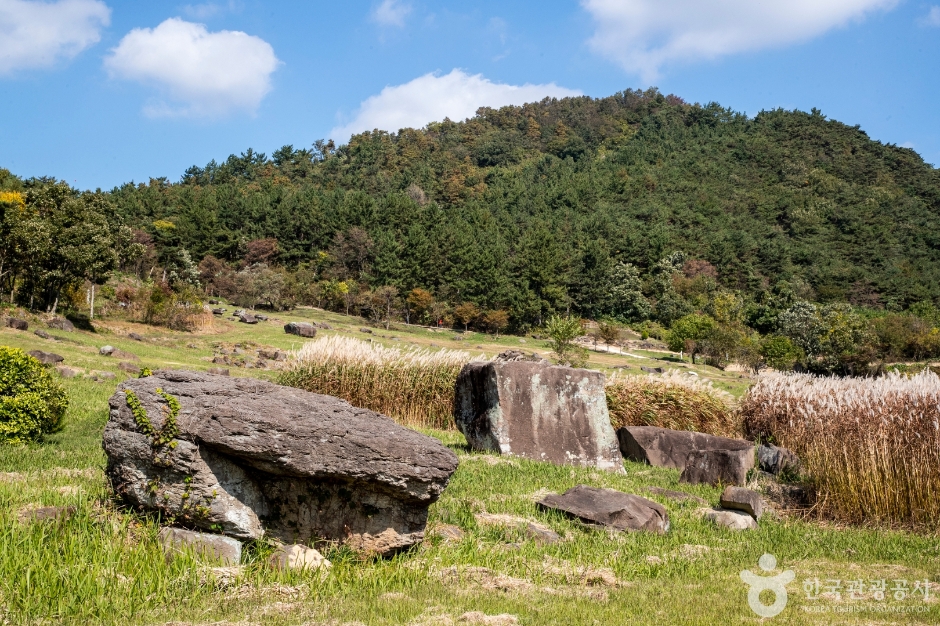
Bronze culture & dolmens
Lute-shaped bronze daggers, plain pottery and massive dolmens (tombs of rulers) were created.
- 약 BC 8세기경
Lute-Shaped Bronze Daggers and Misongni-Type Pottery
The lute-shaped bronze dagger, Misongni-type pottery, and coarse-patterned bronze mirror are representative artifacts of the Bronze Age. The distribution of these finds gives clues to the extent of Gojoseon's influence.
- 약 BC 700년경
Enforcement of the Eight Articles of Law
Gojoseon had an eight-article code of law to maintain social order. This law, which governed murder, assault, and theft, shows that private property and social status distinctions existed.
- 약 BC 4세기경
Gojoseon's Adoption of Royal Title and Growth
Around the 4th century BC, Gojoseon was powerful enough to claim kingship and rival the Chinese state of Yan, and under kings Bu and Jun, royal succession became hereditary and an official hierarchy was established.
Key developments 3 - 약 BC 300년경
Invasion by Jin Gae of the State of Yan
An attack by Jin Gae, a general of the Chinese state of Yan, caused Gojoseon to lose its western territories and shift its center eastward. This period also saw the full-scale influx of iron culture.
Key developments 3 - BC 194
Wiman Joseon
Wiman ousted King Jun and seized power, expanding his realm on the strength of iron-age culture.
Related figures: Wiman - BC 194
Southward Migration of King Jun
Gojoseon's King Jun, having been deposed by Wiman, led his followers south and declared himself king in the land of Han (Samhan). This became an opportunity for Gojoseon culture to spread into the Samhan region.
- BC 109
Han Emperor Wu's Invasion of Gojoseon
Conflict over intermediary trade led Han Emperor Wu to invade Gojoseon. Gojoseon resisted for over a year at Wanggeomseong (the royal capital) but was brought to crisis by splits among the ruling class.
Key developments 4 - BC 108
Fall of Gojoseon
The Han Emperor Wu invaded; Wanggeomseong fell and Gojoseon collapsed.