
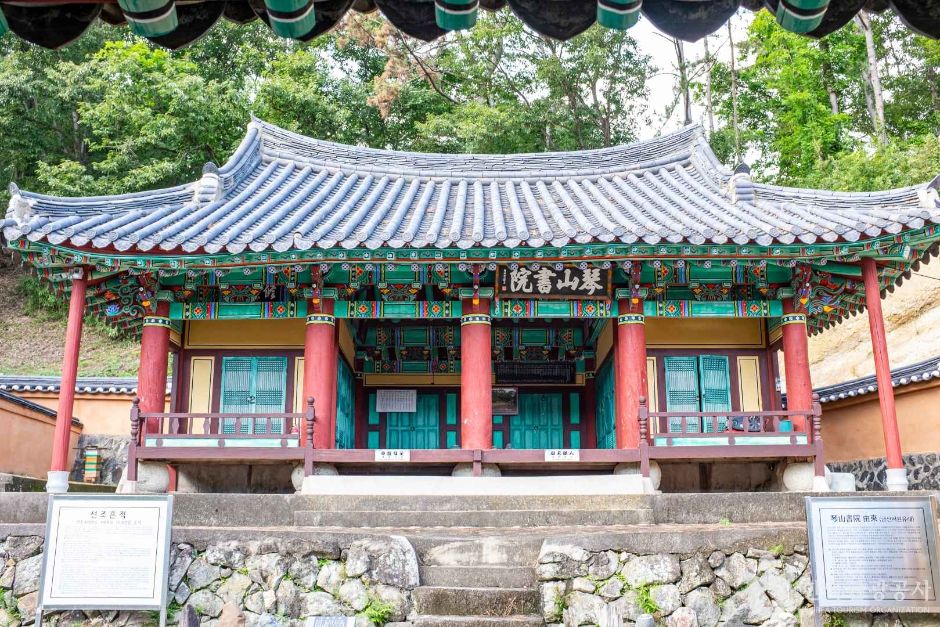
Geumsanseowon
Gyeongsangbuk-do Pohang-si 남구 장기면 신창길191번길 25-12
Open in mapAbout this place
Geumsanseowon was founded in 1707 (33rd year of King Sukjong) by the public agreement of local Confucian scholars to commemorate the learning and virtue of Heo Jin-su, and enshrined his spirit tablet. Heo Jin-su was a disciple of Yi Hwang (Toegye); gentle by nature and outstandingly talented, he nonetheless gave up official position and entered Dosanseowon to devote himself to study. In 1574 (7th year of King Seonjo), the state, esteeming his scholarly conduct, granted him the rank of Tongjeong Daebu; in his later years he built a pavilion in his hometown and devoted himself to training younger scholars, from which time the place came to be called Geumgok. While Geumsanseowon carried out its role of honoring past worthies and providing local education, it was demolished in 1868 (5th year of King Gojong) under the order abolishing seowon issued by the Heungseon Daewongun; in 1909 the shrine was rebuilt by the Confucian community and remains to this day. The buildings within the precincts include the three-bay Gyeongmosa, the four-bay Sudeokheon, the three-bay Dongjae, the outer gate, and the four-bay caretaker's house (gosa). The spirit tablet of Heo Jin-su is enshrined in the shrine Gyeongmosa. The Sudeokheon, a lecture hall consisting of a room and a wooden-floored hall, has its room used by the officiants, byeollyusa, and as a preparation room, while the hall is used for various events and as a gathering place for the Confucian community. The spirit gate is used only as the entrance for participants during memorial rites, and the Dongjae is used as lodging for participants. The gosa is used by the caretaker (goja) who manages the academy.