
Boryeong Seongjusa Temple Site
Seongju-ri, Seongju-myeon, Boryeong-si, Chungcheongnam-do
Open in mapAbout this place
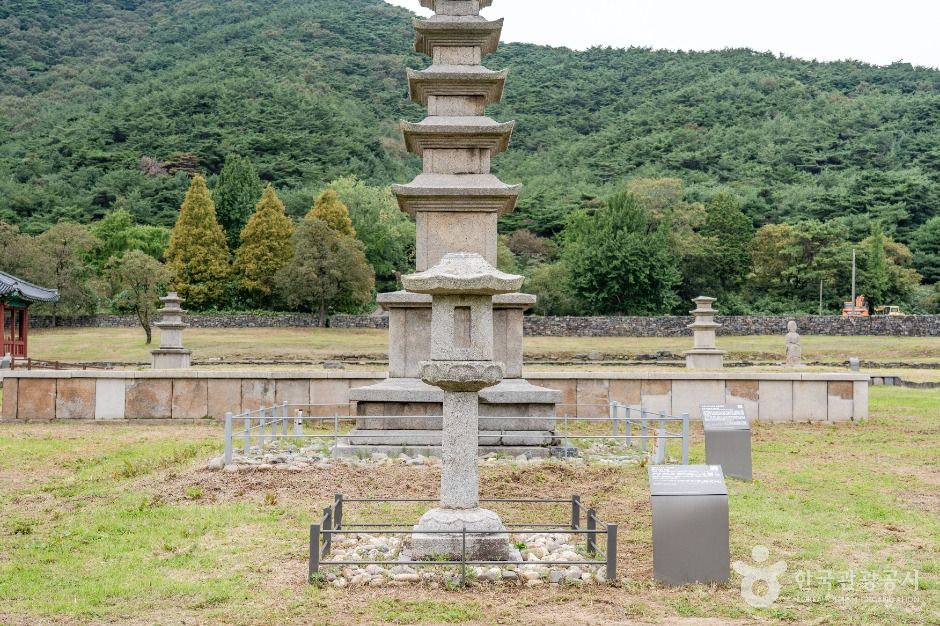
Boryeong Seongjusa Temple Site is located in a valley on the south side of Seongjusan Mountain (676.7 m), in the eastern part of Boryeong-si. Seongjusa Temple was one of the Nine Mountain Zen Schools (Gusan Seonmun) of the late Unified Silla period and was an exceptionally flourishing temple. Seongjusa was originally founded as Ohapsa Temple by King Beop of Baekje in the 6th century, and is said to have been renamed Seongjusa in the late Unified Silla period. At its peak, Seongjusa had a total of about one thousand bays and over two thousand monks. Because of this influence, artifacts from the Baekje era through the early Joseon era are being excavated from the temple site. The temple site, designated as a historic site, currently contains the National Treasure Nanghye Hwasang Baengwol Bogwang Stele, the National Treasure Five-Story Stone Pagoda, National Treasure Central Three-Story Stone Pagoda, National Treasure West Three-Story Stone Pagoda, Chungcheongnam-do Tangible Cultural Heritage stone lantern, and Chungcheongnam-do Cultural Heritage Data stone staircase and stone standing Buddha. Excavations have revealed the foundations of the main hall, three-thousand-Buddha hall, corridors, and middle gate. To the northwest of the temple site stands a pavilion housing a stele with an inscription composed by Choe Chiwon, the great Silla literary master, and written by his nephew Choe Inyeon. Today visitors can view the exhibits at the Seongjusa Thousand-Year History Museum built right beside it.