
Bukchon Hanok Village
Seoul Jongno-gu 계동길 37 (계동)
Open in mapAbout this place
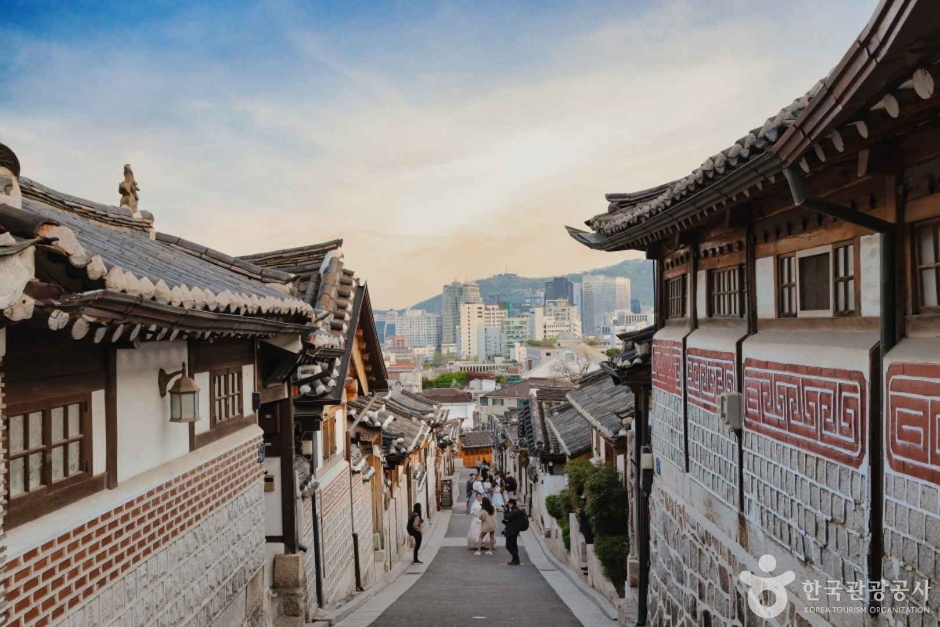
Bukchon, located between Gyeongbokgung Palace, Changdeokgung Palace, and Jongmyo Shrine, is a representative traditional residential district of Seoul where traditional hanok houses are densely clustered. With its many historic sites, cultural properties, and folk materials, it is also called a street museum within the city. It was named 'Bukchon' (North Village) in the sense of the neighborhood above Cheonggyecheon Stream and Jongno, and it includes Gahoe-dong, Songhyeon-dong, Anguk-dong, and Samcheong-dong. In Sagan-dong, Gye-dong, Sogyeok-dong, and Jae-dong, traces of history remain in the very names of the neighborhoods, places that have been preserved for hundreds of years. Bukchon was a residential area for the yangban aristocracy formed during the Joseon dynasty and saw little major change until the 1920s, but change came in the 1930s as Seoul's administrative districts expanded and the urban structure was transformed along modern lines. Housing development companies bought up Bukchon's large lots and woodlands and built clusters of small- and medium-sized hanok in their place; the hanok residential areas now densely gathered at 11 and 31 Gahoe-dong, 35 Samcheong-dong, and 135 Gye-dong were all formed during this period. With glass doors fitted to the daecheong (main wooden-floored hall) and zinc eaves added along the roof edges, Bukchon's hanok, using new materials, evolved into a new type of urban housing adapted to the modern urban fabric while not losing the typological character of the traditional hanok—a point worthy of note. Unlike the 1960s, when the entire Bukchon area consisted of hanok, many hanok disappeared because of the multi-household housing that rapidly went up from the 1990s onward, but in some areas a good number of fine hanok still remain in clusters. The scenery of several hanok joining their roof eaves and sharing walls with their neighbors makes us feel the warm affection and zest for life that we had forgotten. Walking through the Bukchon area, one can feel the charm of the alleyways as much as the beauty of the connected eave lines. To help Bukchon Hanok Village become a sustainable tourist destination, visitors are asked to practice 'silent tourism.' * 'Silent tourism' refers to a form of tourism in which visitors travel quietly without making loud noise, so that residents' rights to living space and environment are not infringed upon by tourists' visits. * Etiquette to observe when visiting Bukchon Village: - Group tourists must be accompanied by a guide - No illegal parking of tour buses - No trespassing, unauthorized photography, illegal dumping, public urination, or noise - Observe the village visiting hours