
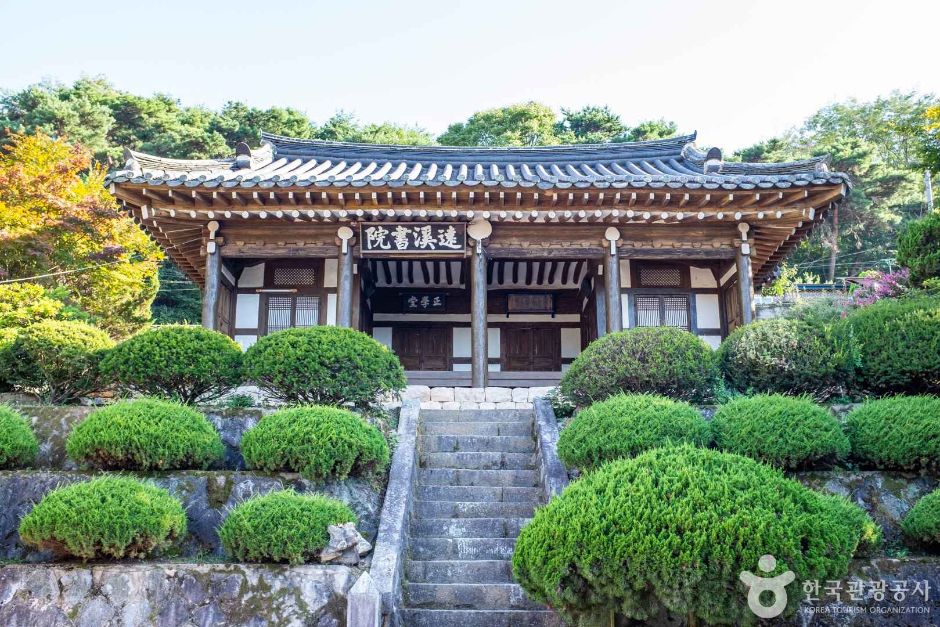
Wongye Seowon
Gyeongsangbuk-do Gimcheon-si 음지마길 40-5 (부곡동)
Open in mapAbout this place
The Wongye Seowon, on the mid-slope of a mountain in Bugok-dong, Gimcheon, is a seowon associated with Song Jun-pil, a modern Confucian scholar and independence activist who led the Paris Letter (Pari Jangseo) movement. After suffering imprisonment for his part in the Paris Letter incident, Song Jun-pil retreated in 1933 to Eumji village in Bugok-dong to escape surveillance by the Japanese police. There, in 1942, he built the Wongye Jeongsa study hall to pursue scholarship and educate younger students. The Wongye Jeongsa that Song Jun-pil ran contributed greatly to the formation and transmission of modern Confucianism in the Gyeongsang region, not only during the Japanese colonial period but into modern times. After his death, his disciples and local Confucians built the Wongye Seowon in 1968 to commemorate his achievements. The lecture hall was named Jeonghakdang, and the following year a shrine was erected on the site of the former Wongye Jeongsa behind the seowon and named Sungdeoksa, where Song Jun-pil's spirit tablet was enshrined in 1971. That same year, the eastern dormitory Ilseongjae, the western dormitory Jeyangdang, and the gate pavilion Jikbangmun were built. The signboard of Sungdeoksa is in the handwriting of former President Park Chung-hee.