
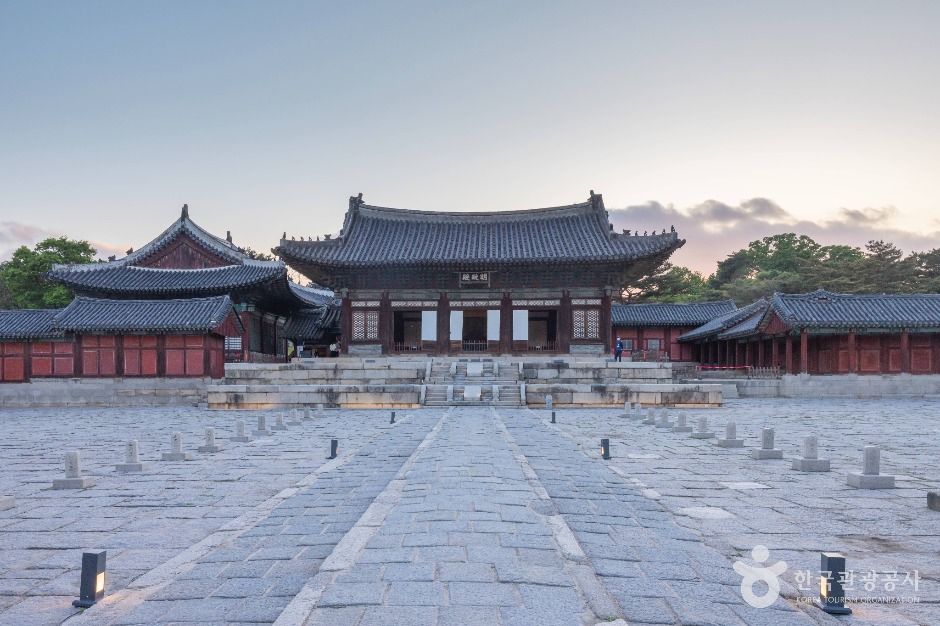
Changgyeonggung Palace
Seoul Jongno-gu 창경궁로 185 (와룡동)
Open in mapAbout this place
Changgyeonggung Palace was built by King Seongjong on the site of the former Sugang-gung for his three dowager queens. The palace originally stood where Sugang-gung (壽康宮), built in 1418 (the accession year of King Sejong) by Sejong for the retired King Taejong, had been. Later, in 1483 (the 14th year of Seongjong), King Seongjong greatly expanded Sugang-gung for three dowager queens—Queen Jeonghui, consort of King Sejo; Queen Sohye, consort of King Deokjong; and Queen Ansun, consort of King Yejong—and named the palace Changgyeonggung. Changgyeonggung formed a single palace complex with Changdeokgung without a boundary between them, known as Donggwol (東闕, the Eastern Palace), and was used mainly as living quarters for the royal family. Destroyed by fire during the Japanese invasions of 1592 (the 25th year of King Seonjo), it was rebuilt in 1616 (the 8th year of Gwanghaegun); most of its buildings were again lost to a great fire in 1830 (the 30th year of King Sunjo) and rebuilt four years later. However, after King Sunjong ascended the imperial throne in 1907, a zoo and botanical garden were created within the palace, and it began to lose its character as a royal palace. In 1911 the Japanese even downgraded its name to Changgyeongwon (昌慶苑), turning it into a park rather than a palace and causing severe damage. After Liberation, its name was restored to Changgyeonggung in 1983; the zoo within the grounds was relocated and restoration work returned it to its original palace form, giving it its present appearance. Unlike other palaces that face south, Changgyeonggung has its main gate and throne hall arranged to face east.