
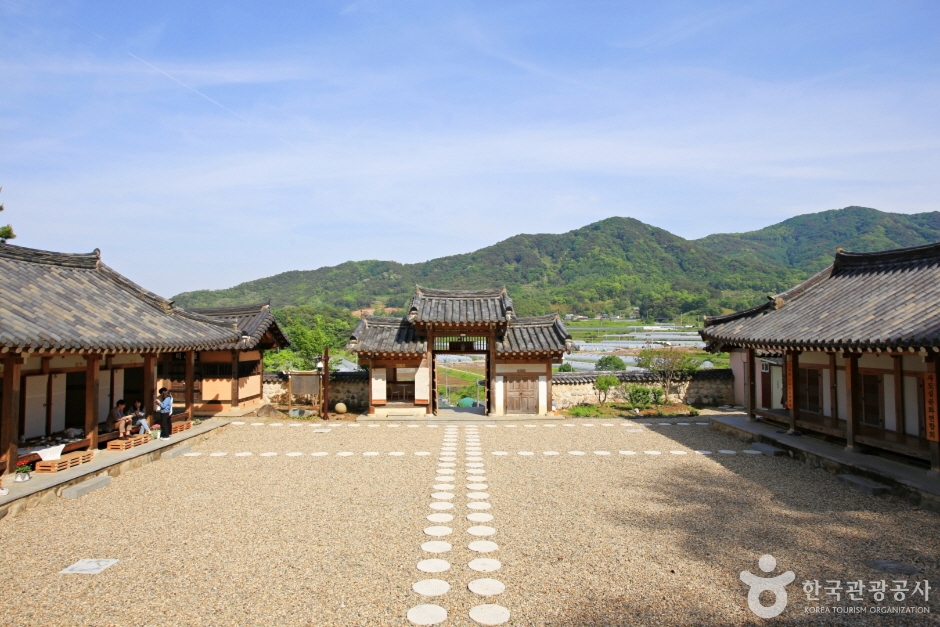
Cheongcheon Seodang
Gyeongsangbuk-do Seongju-gun 대가면 칠봉2길 36-16
Open in mapAbout this place
Cheongcheon Seodang was first founded in 1729 (the 5th year of King Yeongjo's reign) by the local Confucian literati (sarim) as Cheongcheon Seowon to enshrine Donggang Kim U-ong. It was demolished during the reign of King Gojong under the order to abolish the seowon, and was later rebuilt as Cheongcheon Seodang when Kim Ho-rim, a descendant of Kim U-ong, remodeled the men's quarters (sarangchae) of the head family's house. After it was rebuilt as a seodang, in the spring of 1910 (the 4th year of King Sunjong) Kim Ho-rim's son Simsan Kim Chang-suk repaired the seodang as part of a movement to save the nation through education, named it Seongmyeong School, and used it as a school to nurture the younger generation. Together with Hoeyeon Seowon, it served as a representative seowon of the Seongju region and as a center of the literati's activities. Centered on Kim U-ong, it enshrined figures of outstanding scholarship from Seongju County and was a hub of the local literati's activity. It also carries educational and historical significance in that Kim Chang-suk, a Confucian scholar of Seongju County who devoted himself to the independence movement during the Japanese colonial period, used it as a space to nurture younger scholars; for this reason it is designated a Tangible Cultural Heritage of Gyeongsangbuk-do. In the Seongju area Kim U-ong was called one of the 'Two Gang' (Yanggang) together with Jeong Gu, and he became a disciple of Toegye Yi Hwang. He entered government service and held various offices, and was exiled during the Gichuk Literati Purge.