
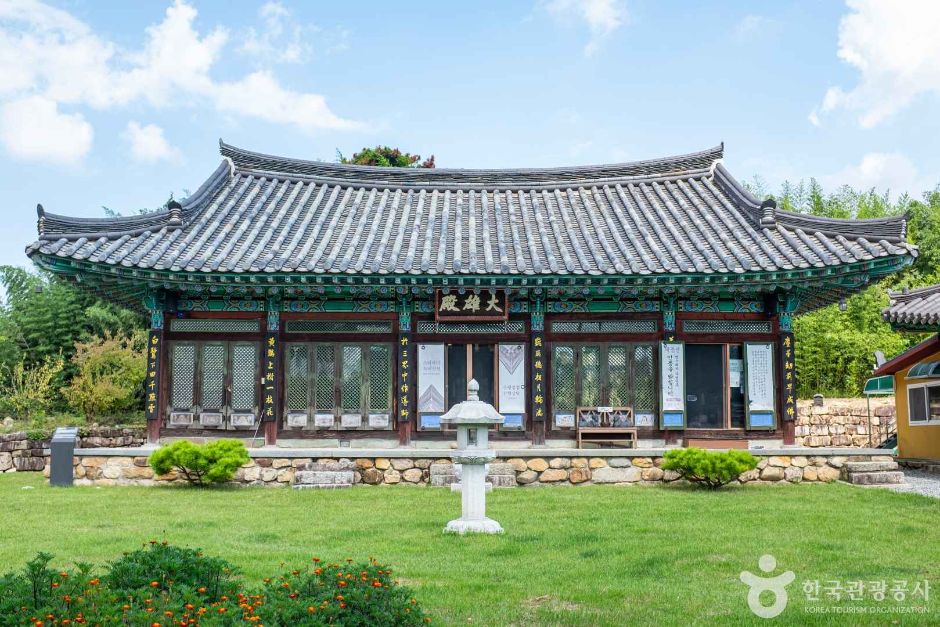
Yeonjinam Hermitage (Gyeongju)
120-5 Hwalseonggil, Oedon-eup, Gyeongju-si, Gyeongsangbuk-do
Open in mapAbout this place
Yeonjinam Hermitage sits on a hill in the small village of Hwalsong-ri, inside the grounds of Gyeongju Gwaereung. It was founded in the late Japanese colonial period by the Buddhist laywoman Kim Yeonji-hwa. After a vision, she found an abandoned stone Buddha by the roadside and enshrined it at this hermitage. When a Japanese soldier demanded to know where the statue came from and tortured her for information, it is said she spat blood and died on the spot. The statue is now designated as a Gyeongsangbuk-do cultural heritage material — a standing stone Medicine Buddha — and many people visit seeking blessings for academic success, business, and health. The hermitage consists of a main hall (five bays wide by three bays deep, hip-and-gable roof) and two monks' quarters. Nearby, Gyeongju Gwaereung — located in a pine forest on the south slope of a low hill — is presumed to be the tomb of Silla King Wonseong (r. 785–798). According to legend, there was originally a small pond on the site, and the king's body was laid to rest suspended above the water without disturbing the pond's shape, giving rise to the name 'Gwaereung' (Suspended Tomb). This tomb is mentioned in Yu Hong-jun's 'Our Cultural Heritage Tour,' acclaimed as having the most beautiful tomb garden among the 155 ancient tombs in Gyeongju and considered the pinnacle of Unified Silla realist sculpture.