
Mungyeong Joryeong Gates
Gyeongsangbuk-do Mungyeong-si 문경읍 상초리
Open in mapAbout this place
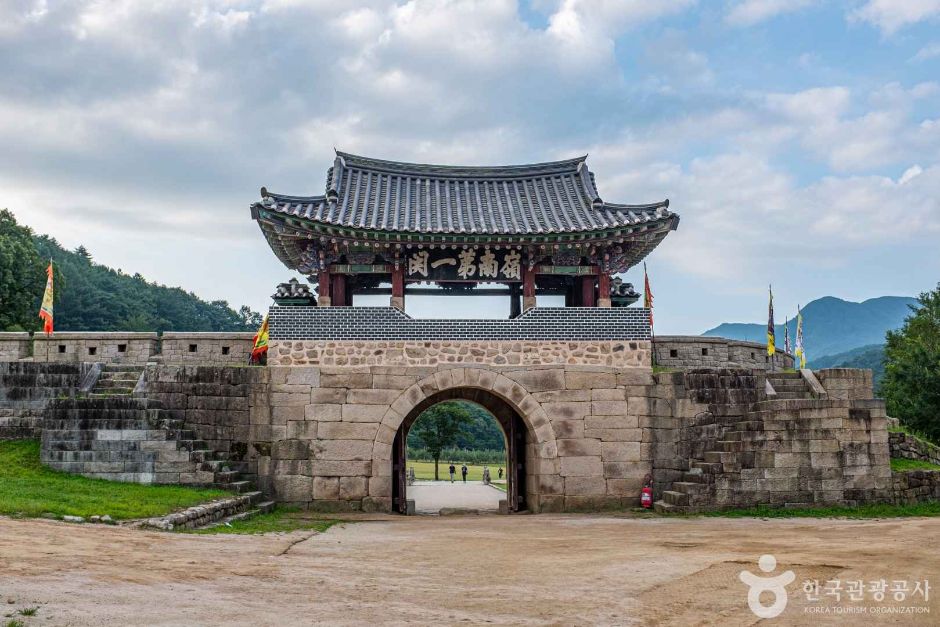
The Mungyeong Joryeong Gates served as the gateway between the Yeongnam region and Seoul as well as a military fortress. From the early Goryeo period this place was called Joryeong and established itself as an important transport route. It was a militarily crucial point, so much so that during the Imjin War in the 2nd year of King Seonjo of Joseon (1592), the Japanese commander Konishi Yukinaga joined forces here with the troops of Kato Kiyomasa advancing north from Gyeongju. At that time the court expected this place to be defended, but General Sin Rip failed to stop the Japanese army at Joryeong and instead met and fought them at Tangeumdae in Chungju, where he was defeated. Afterward the court deeply regretted this blunder and repeatedly discussed installing large-scale gates at Joryeong, but it was not until the 34th year of King Sukjong (1708) that the three gates were completed. The first gate leading from Mungyeong to Chungju is called Juheulgwan, the second gate is called Jodongmun or Jogokgwan, and the third gate is called Joryeonggwan. Jodongmun became an important transport route after Sin Chung-won built a fortress here following the Imjin War in the 25th year of King Seonjo of Joseon (1592). When Joryeong Sanseong Fortress was built in the 34th year of King Sukjong (1708), the old fortress north of Maebawi Rock was rebuilt and made into a middle fortress, and its gate was named Jogokgwan. The present facilities are a restoration of what had fallen into ruin. The Mungyeong Saejae trail is laid out from the first gate Juheulgwan to the third gate Joryeonggwan. Upon entering Mungyeong Saejae Provincial Park, the very first place one encounters is Juheulgwan, the first gate of Mungyeong. Against a backdrop of vast green lawns spanning thousands of pyeong, the softly curving tiled roof and fortress gate arrest the traveler's steps. Passing 3 km from Juheulgwan, the valleys on both sides narrow and one meets the second gate, Jogokgwan, amid beautiful scenery. Jogokgwan makes one feel it is a natural fortress, with strange crags and cliffs towering imposingly as they look down upon it. Passing the Jogok mineral spring and going another 2.3 km, one can see Donghwawon, a historic site from the era of King Gongmin at the end of Goryeo, and going a further 2.2 km one reaches the third gate, Joryeonggwan. Along the roadside to the left of Joryeonggwan is the Saejae mineral spring, a famed spring of history that quenched the thirst of scholars and travelers of Yeongnam hastening along the road to Hanyang with lofty aspirations; it was even selected as one of the '100 Famous Waters of Korea.' From the first gate to the third gate of Mungyeong Saejae, the path is level and easy for anyone to walk, so one can stroll the Mungyeong Saejae road just like the scholars of old.