
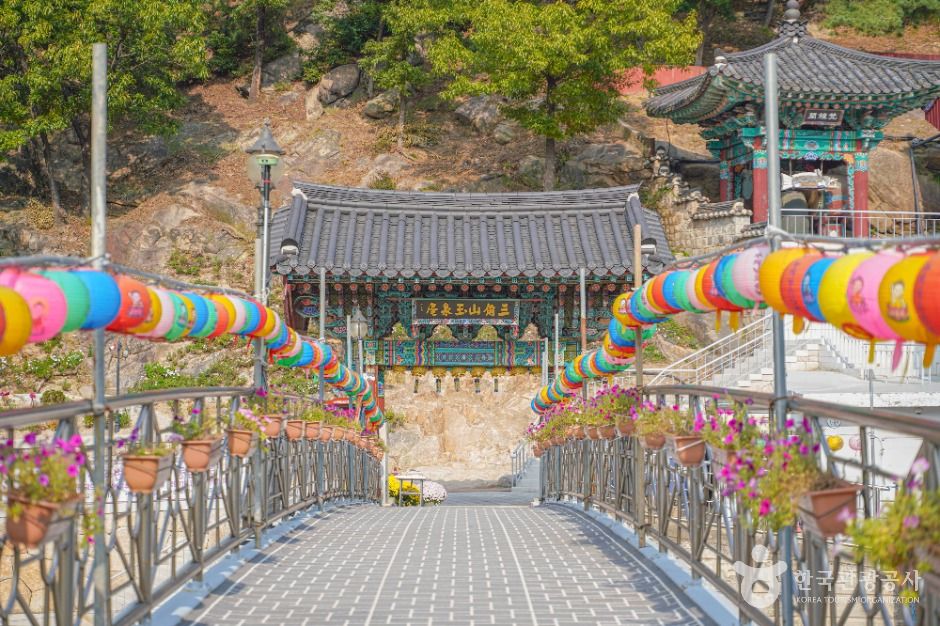
Okcheonam (Seoul)
Seoul Seodaemun-gu 홍지문길 1-38 (홍은동)
Open in mapAbout this place
Okcheon means a very clear spring. Records tell that the spring water that flowed here had medicinal effects, so patients gathered around it. Also, in the Bodogak pavilion of Okcheonam is enshrined a seated rock-carved Bodhisattva. This is also called the Haesu Gwaneum (Sea-Water Avalokitesvara) statue or the White Buddha of Bodogak. Here 'Bodo' means 'to deliver all sentient beings' and refers to the vow of Avalokitesvara. Therefore, Haesu Gwaneum is the most accurate name, and actual records also survive. The name 'Baekbul' (White Buddha) seems to derive from records made by foreigners. The seated rock-carved Bodhisattva follows the style of Goryeo-period rock-carved Buddha statues, and the oldest record is Seong Hyeon's description of it as 'Bulam' (Buddha Rock) in the Yongjae Chonghwa. Since powerful temples such as Janguisa, Seunggasa, and Sahyeonsa were located in this area from the Silla period onward, it seems that Bodogak and Okcheonam were founded under their influence. There is a legend that Yi Seong-gye, King Taejo of Joseon, offered prayers here when he established the capital at Hanyang; there are also legends that General Gwon Yul fought a battle here during the Imjin War, and that the wife of Heungseon Daewongun prayed here for her son, King Gojong.